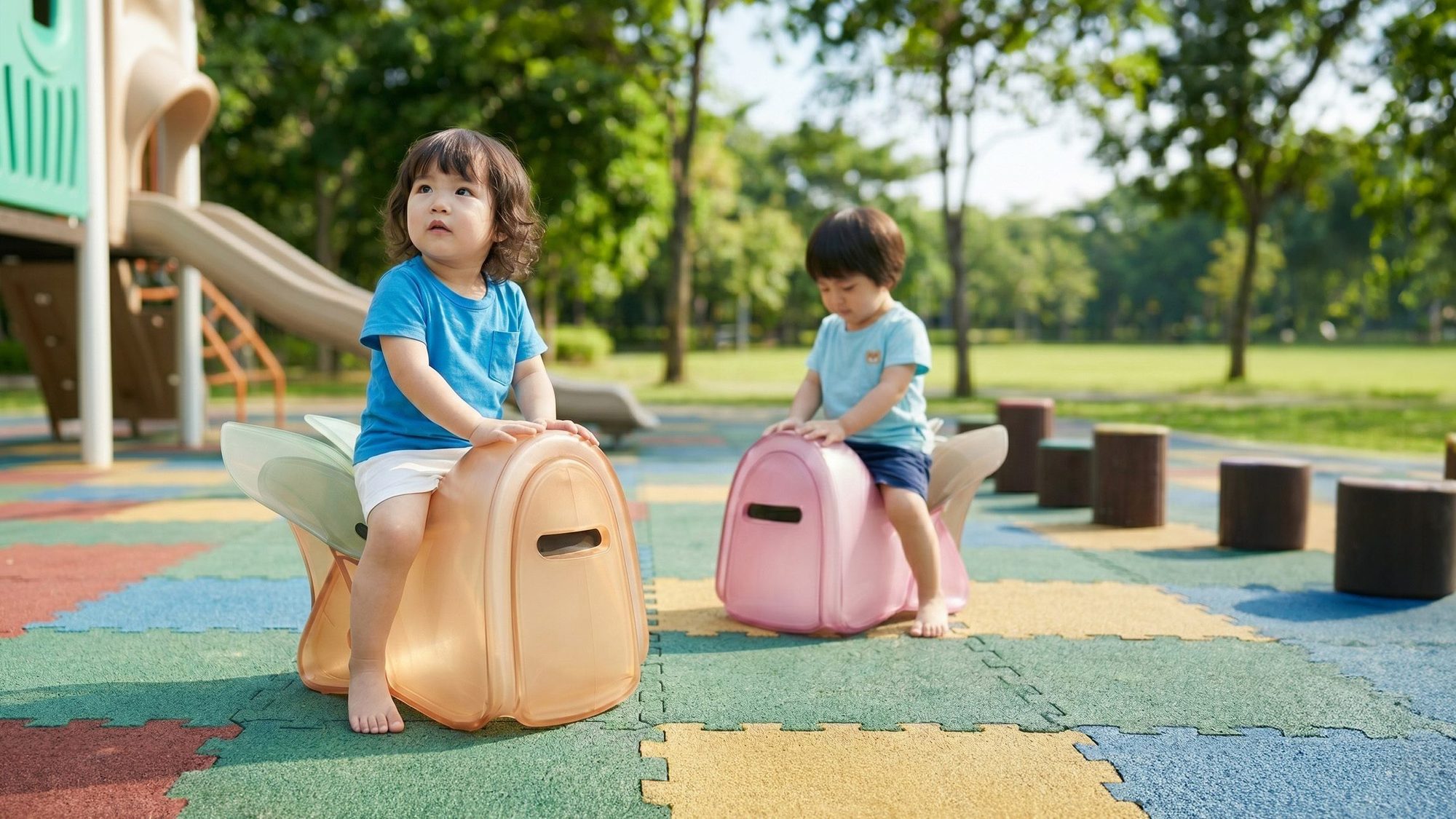
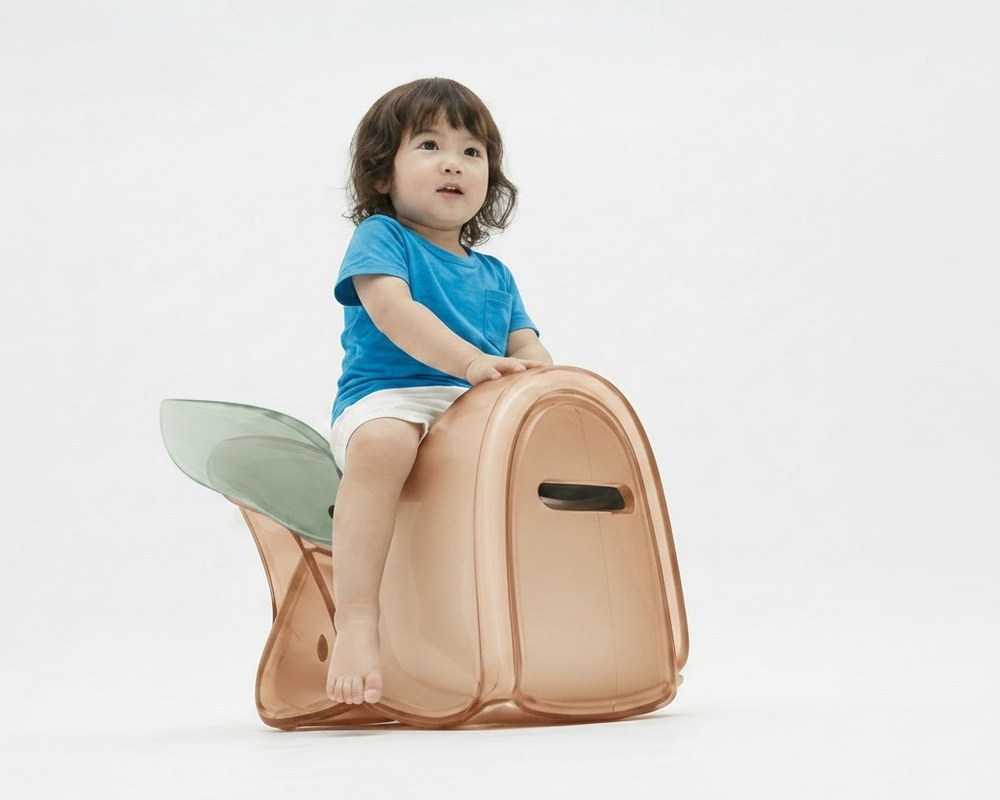
The brief was a play installation for public spaces. What I drew was a sit-on cicada with a cajón inside it — one object that holds two behaviors at once: you can rest on it like furniture, or strike it like an instrument, and the form does not pick a side.
Industrial Design · 2014
Cicada Chase 逐蟬
A sit-on percussion installation for neighborhood parks. Cajón body, bamboo-cicada silhouette: the chair you sit on is the drum you play.
01 · Form
A chair you also drum
02 · The walk
What I kept writing down
Over a few Saturday afternoons in 台南 between studio assignments, I walked through neighborhood parks within five minutes of campus and sketched what children actually did with the equipment installed for them.
The note that kept repeating: molded-plastic playgrounds are prescribed play. Climb the ladder, go down the slide, walk back to the ladder. The equipment allows only one move. The kids who weren’t on the equipment were the ones doing the interesting thing: slapping rhythms on the bench beside their grandmother, drawing on rubber tiles with a found stick, spinning a bamboo-cicada toy in cupped palms.
I started asking: what would a playground object look like if it made those side activities the main thing?
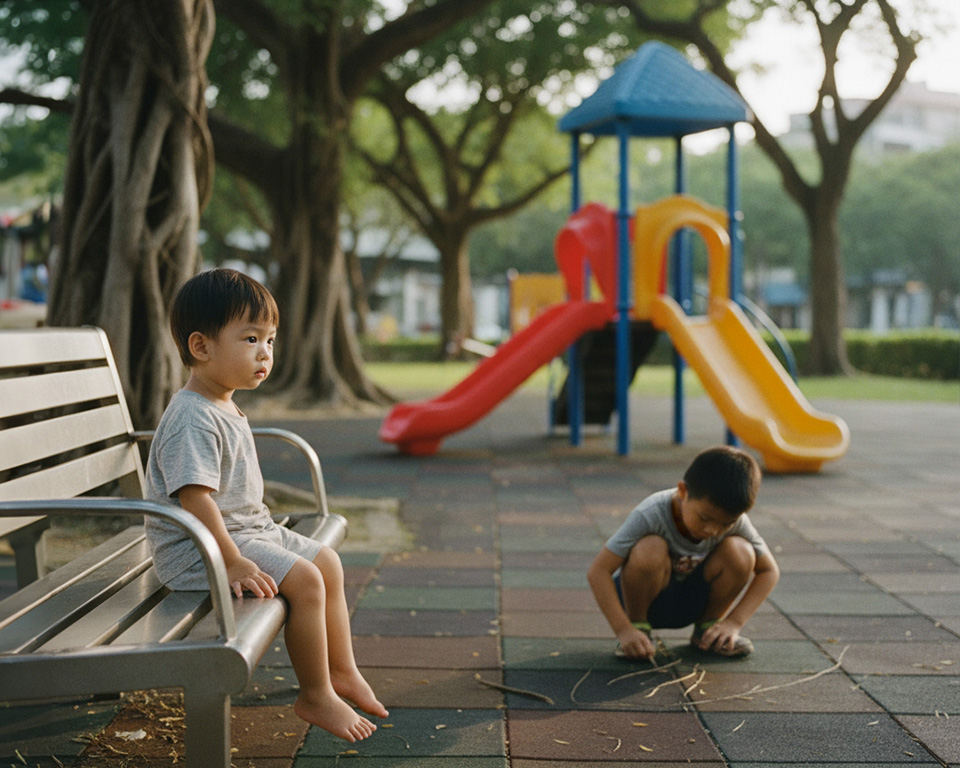
Field A · The bench The play happens around the equipment, not on it.
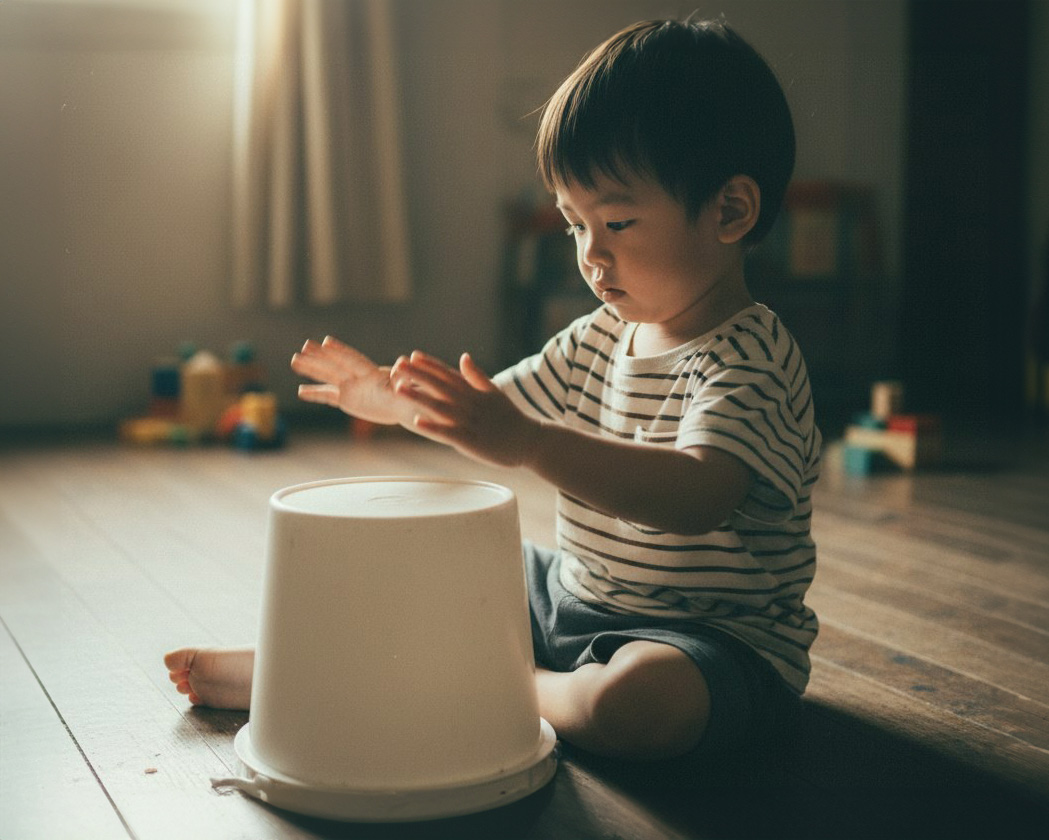
Field B · The latent drummer Any flat surface is a drum if no one stops you.
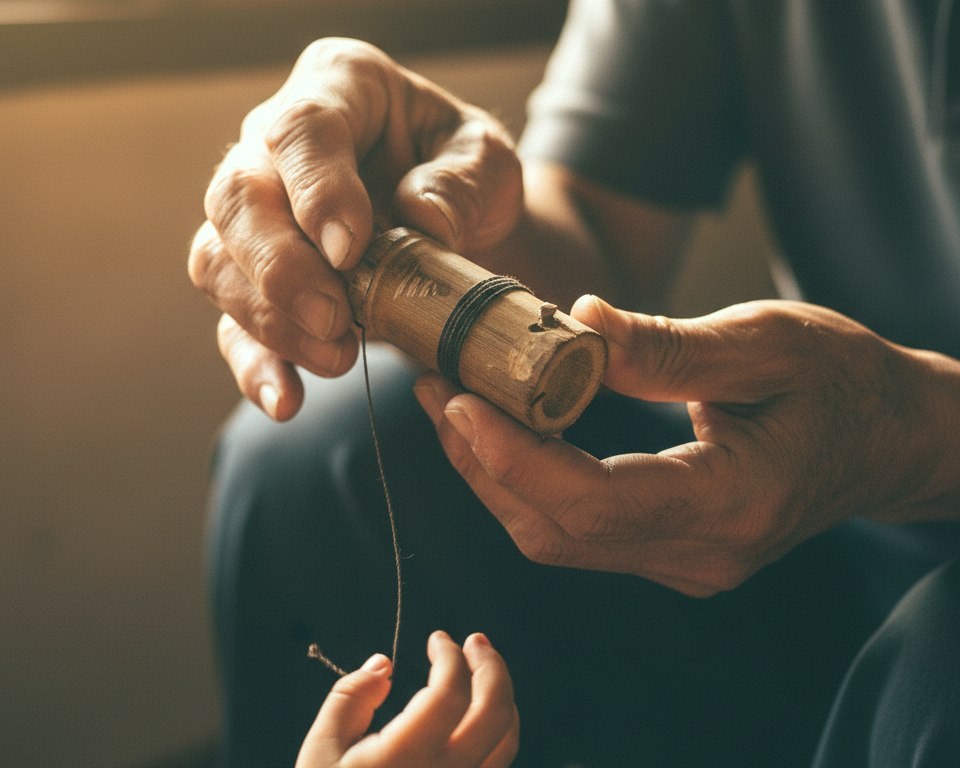
Field C · The handover The folk toy that knew: form makes sound when touched.
03 · The bet
Two references in one drawing
From the walk, two references slid onto the same page in my sketchbook — one furniture, one folk toy, both already chairs of the body.
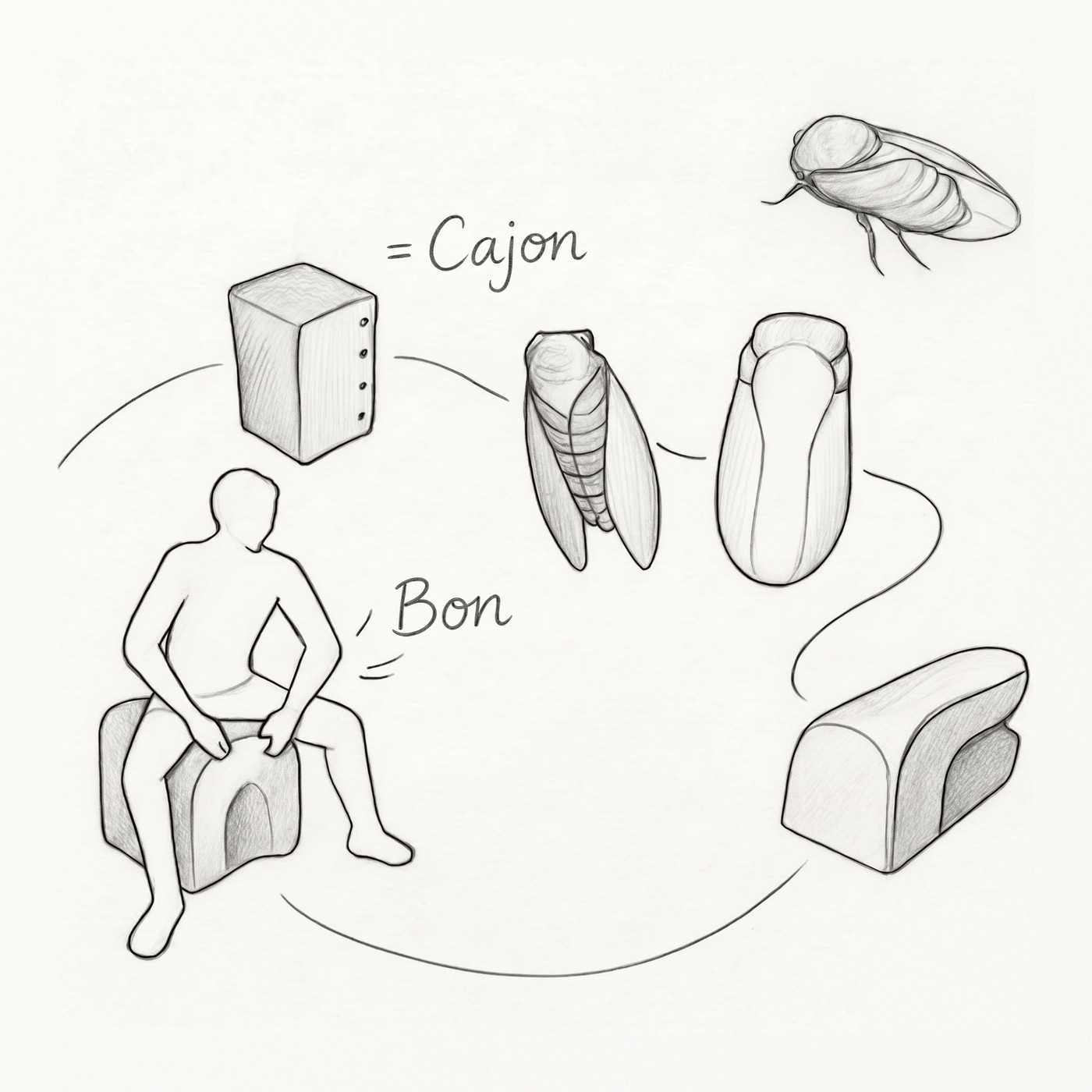
- Cajón The box drum you sit on and play between your knees. Already a chair-and-instrument hybrid. Public-park-friendly: low, broad base, no moving parts.
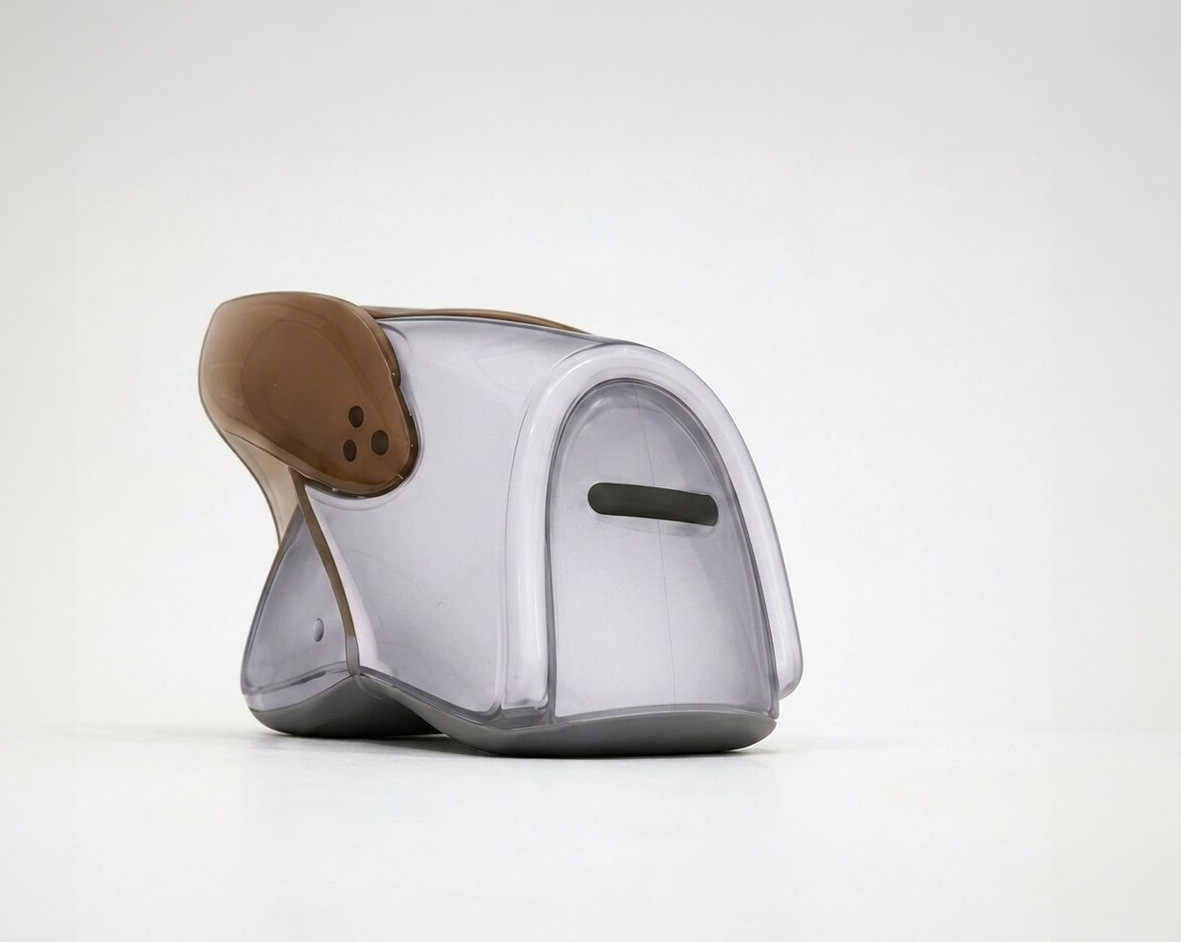
- 竹蟬 Bamboo cicada The folk toy whose entire purpose is producing a sound when played with. The silhouette I wanted: rounded body, wing flange overhead, opening at one end as the resonator slot.
- The hybrid A sit-on form whose shape itself reads as something that wants to be touched and to make sound. Cicada silhouette as design language; cajón geometry as the structural rule.
04 · The form & color
One shell, two interchangeable parts
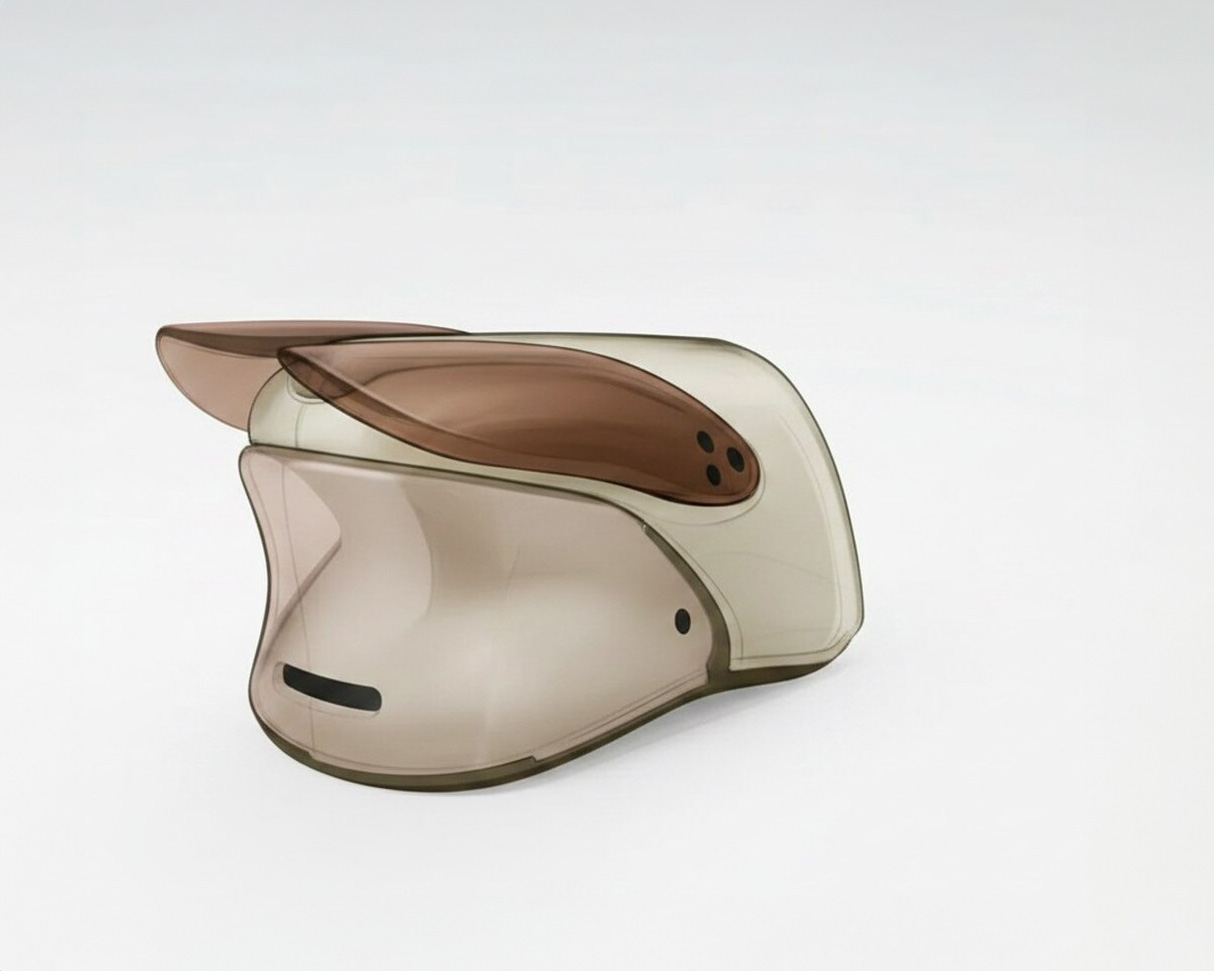
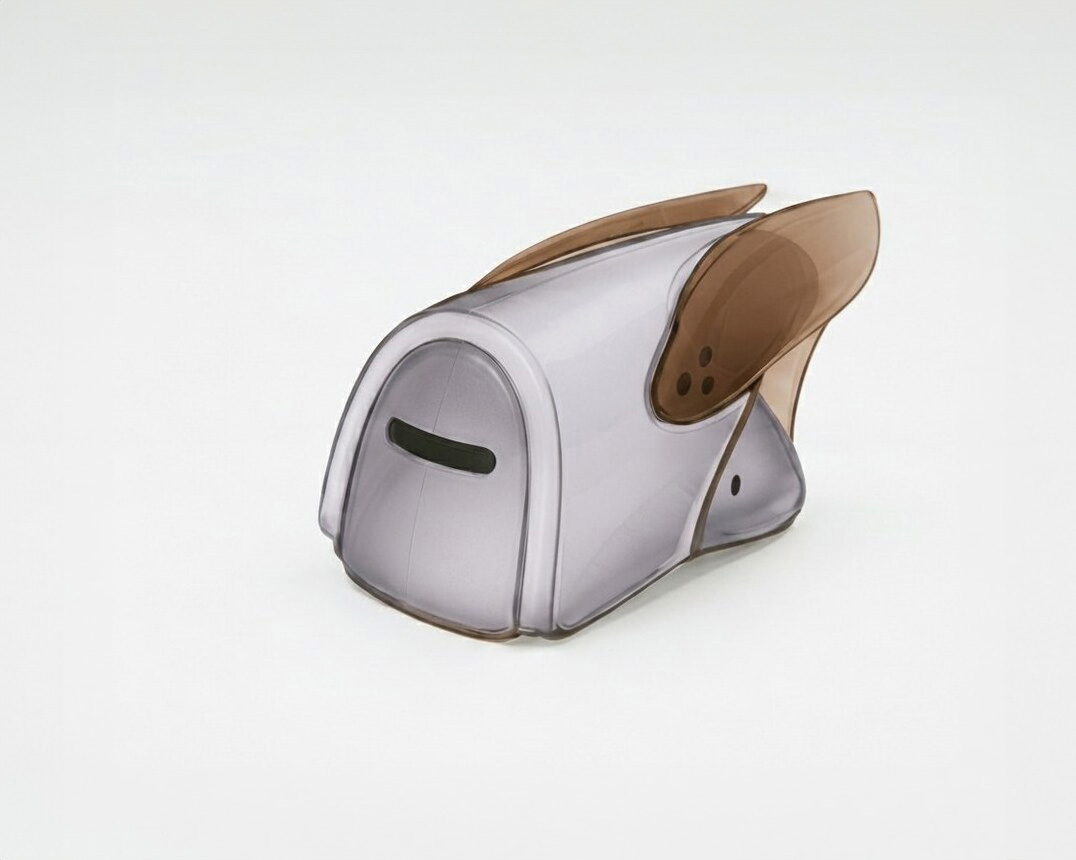
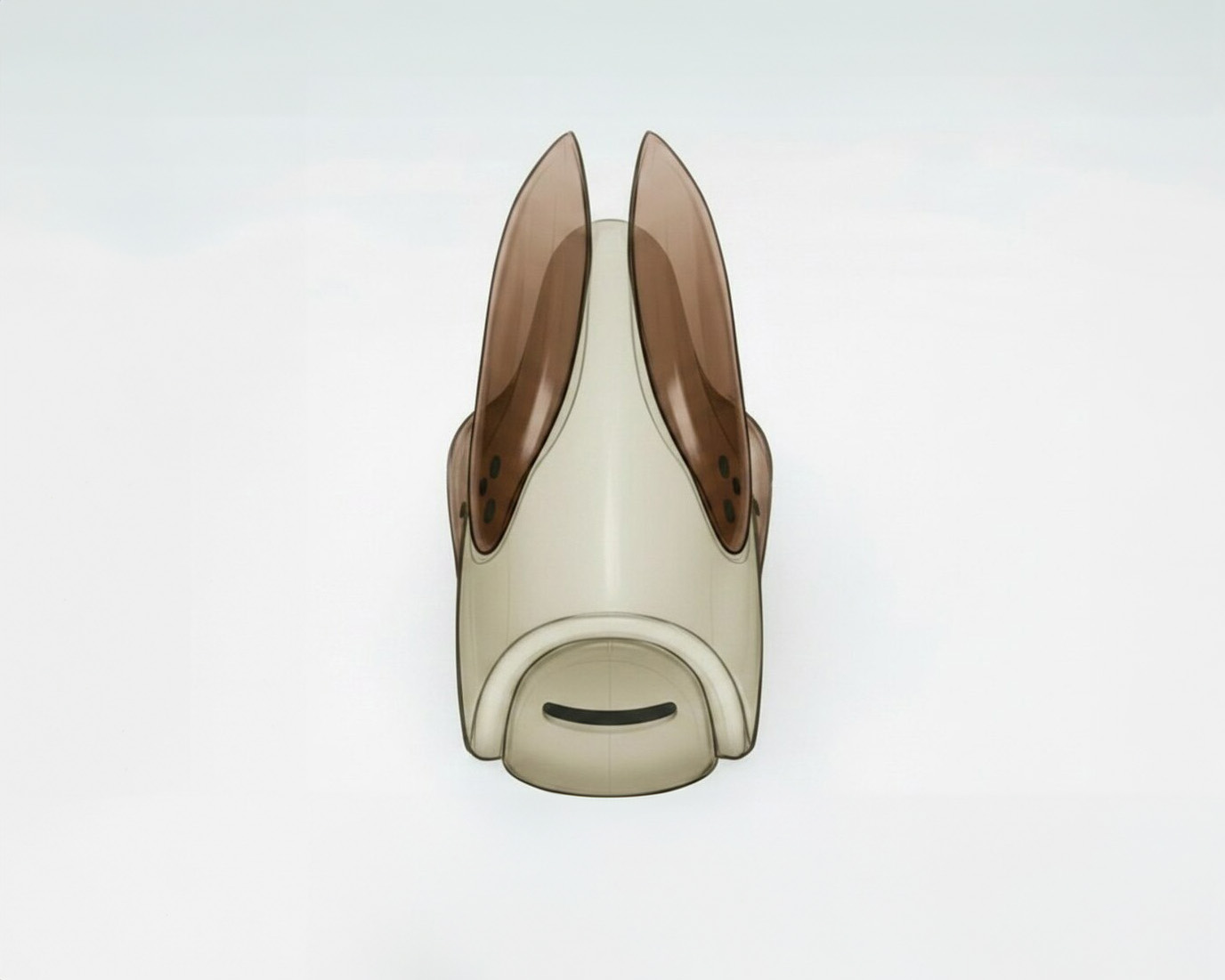
Body: arched cajón shell, hollow inside for tone. Wing flange: a single curved sheet that lifts off the body to read as the cicada’s membrane and acts as a hand-rest when sitting. Resonator slot: cut into the front face, the same horizontal opening that gives a cajón its bass.
Body and wing are separate moldings. The proposal lets a purchaser (a park, a school, a daycare) spec each shell’s color independently and pair them freely. A park can plant a small flock of cicadas that read as siblings rather than identical units.
05 · In play
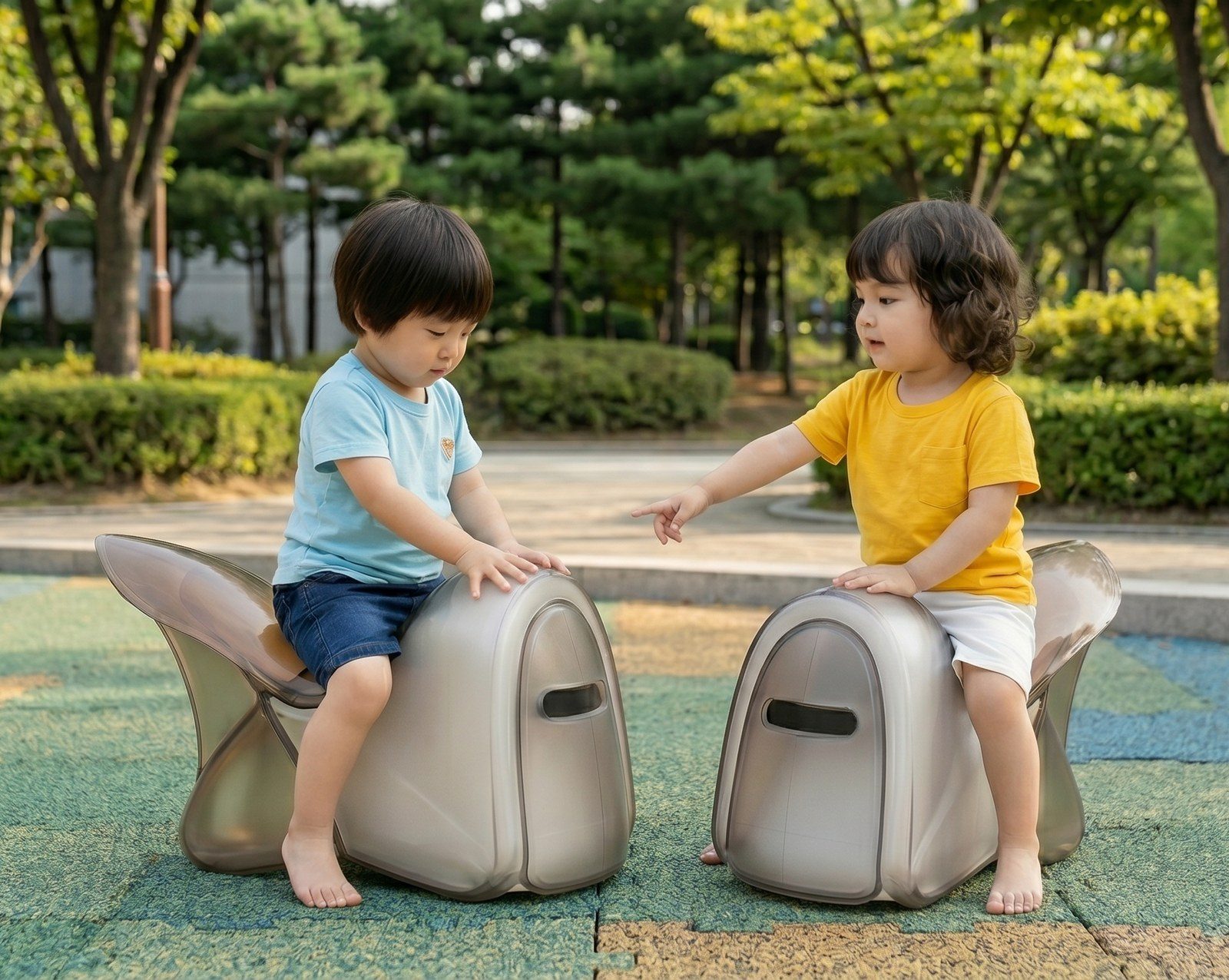
Two kids, two chairs, one rhythm
The reason a flock matters: one chair is furniture, two chairs are a call-and-response. The body that drums learns faster when there’s another body drumming back.
06 · What stayed open
What this project didn’t do
I never built a 1:1 prototype. Never installed it in a park. Never sat with kids for a Saturday to watch them drum on it. It stayed at form-proposal: Rhino model, sketches, paper mock-ups in studio. The acoustic claim (“it’s a cajón”) is an analogy I drew, not a tuning that was measured.
If this proposal had a second life now, the first step would be a 1:1 in a real park for two weeks, with a phone on a tripod. The form was the easy part. The validation it needs is the work I haven’t done yet.