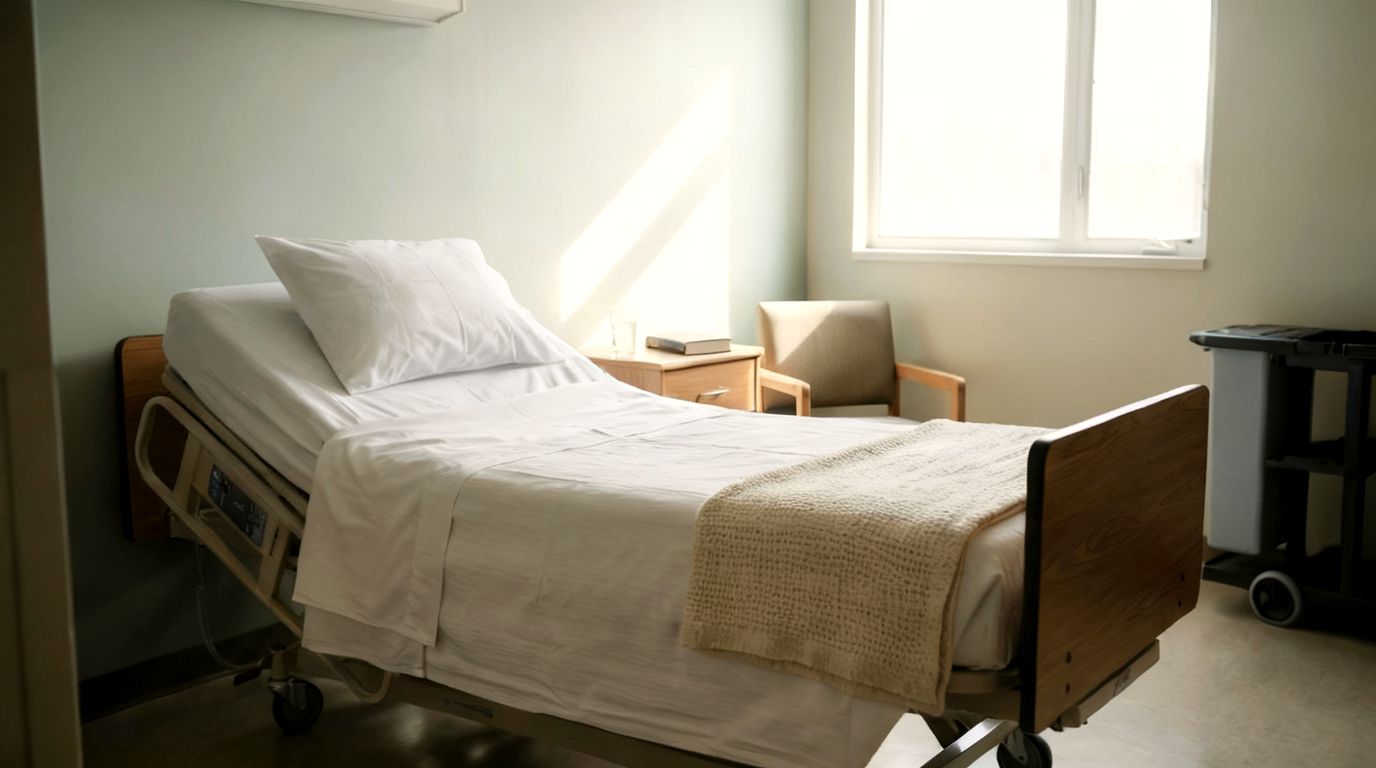
Three days of AEIOU observation (activities, environment, interactions, objects, users), shadowing caregivers across two eldercare wards. The framework helped us pinpoint where the existing carts failed the caregiver's hands: towels stored where one nurse could not carry them, water tanks set too far below the work height, clean and used water mixing because there was nowhere to put either, frames too wide for the gap between beds.
User Research · Industrial Design · 2014
Wash Enjoy 洗·樂
A bath-assistance cart for caregivers bathing bodies that cannot leave the bed — age, disability, recovery alike. Four of us at TUT senior year, I led the team and the visual design. From bedside observation through a welded stainless tube frame and CNC-cut ABS panels.
01 · Field
Before any line was drawn
02 · Storyboard
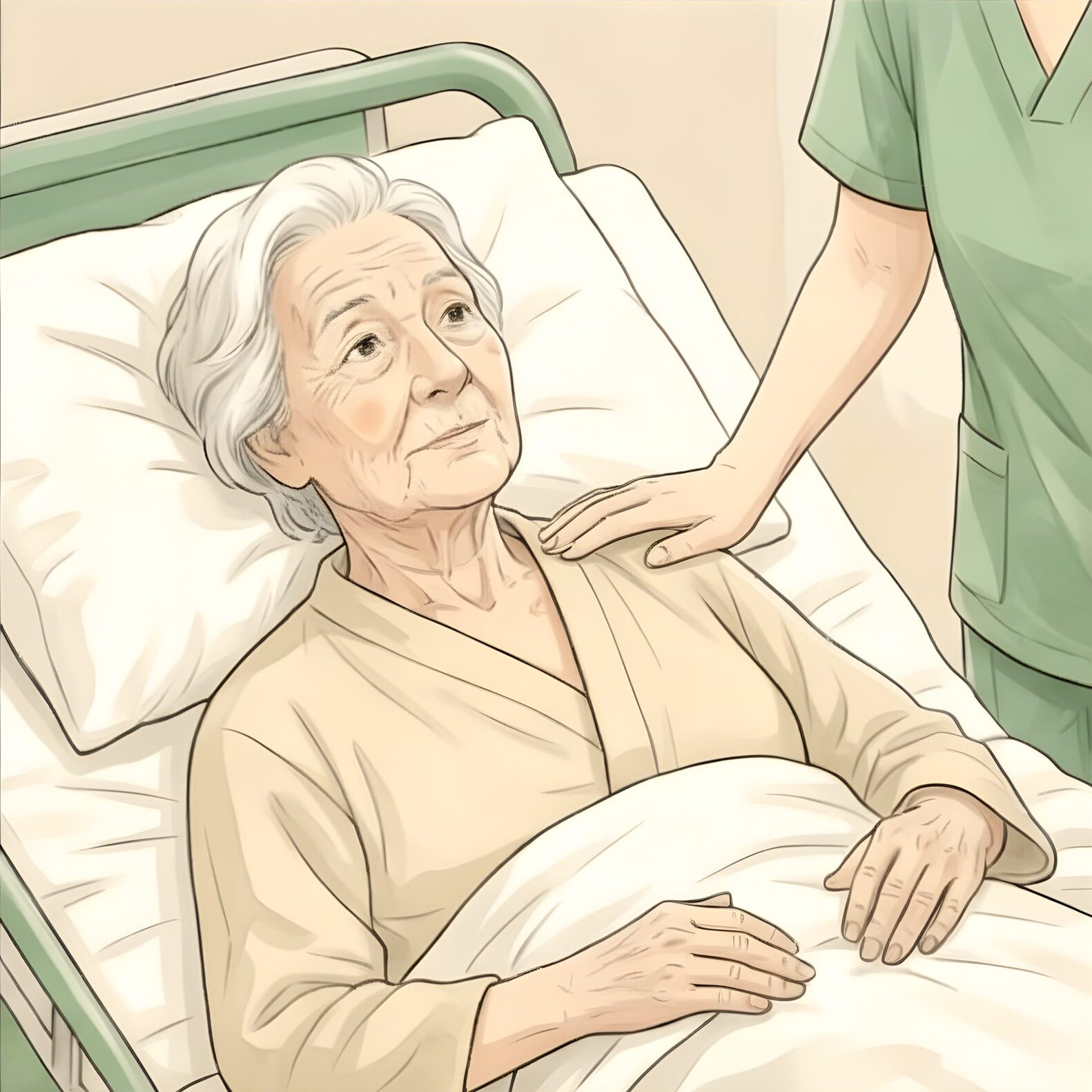
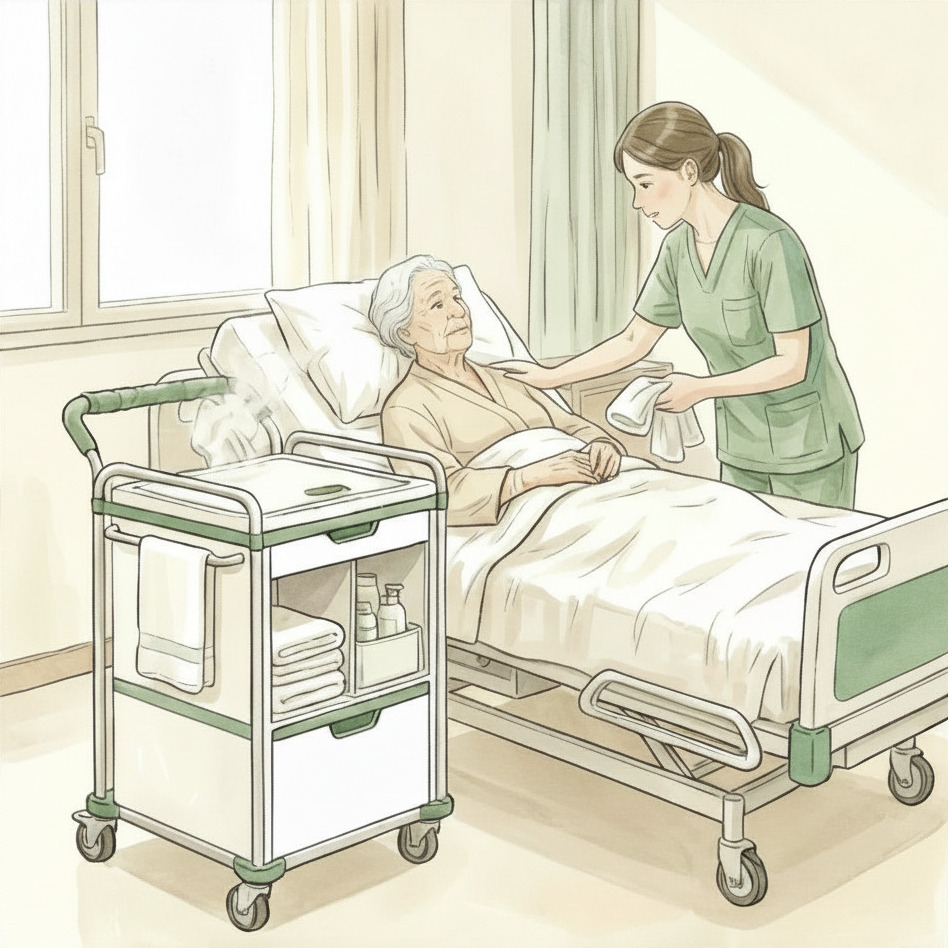
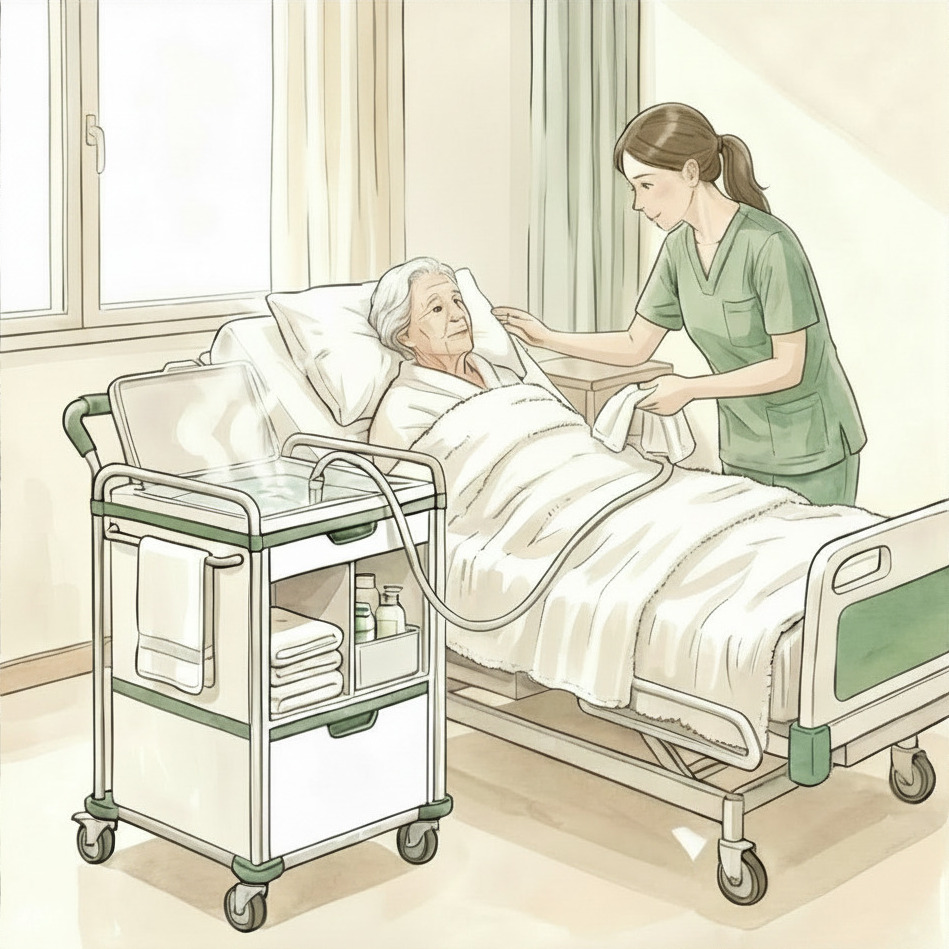
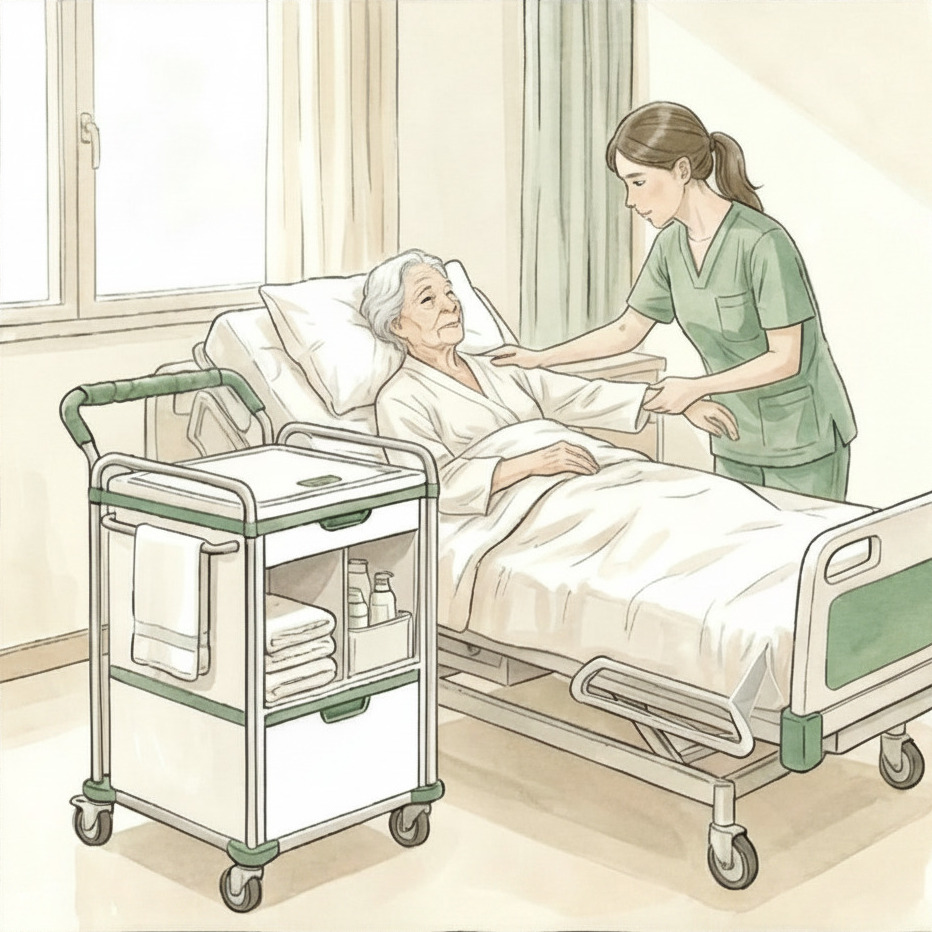
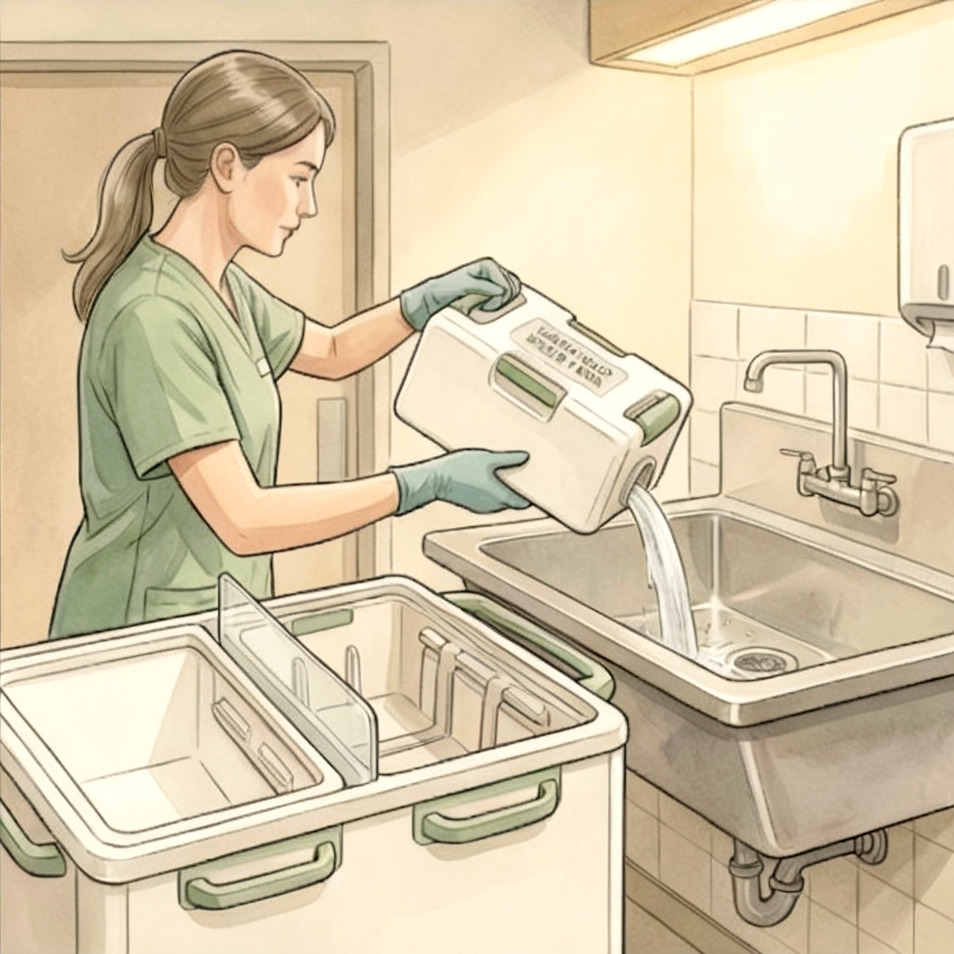
Storyboard before form
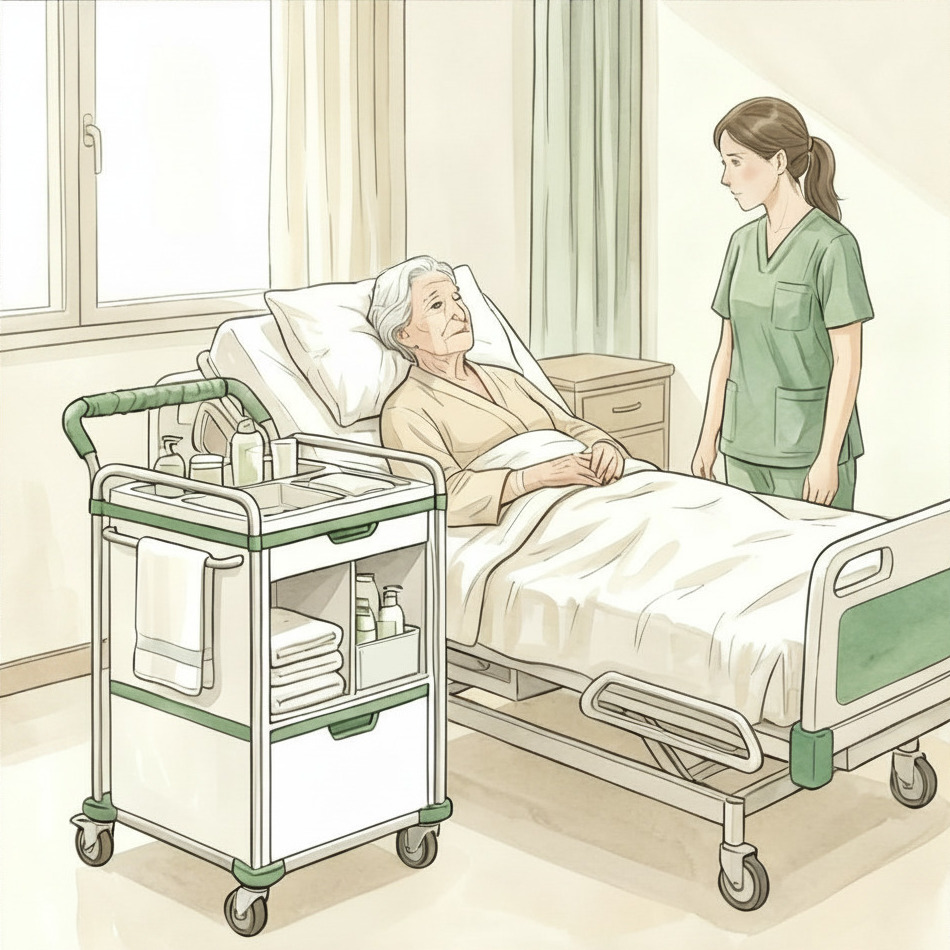
The bathing process, storyboarded before any form was drawn. Patient settled, the quiet moment of explanation, washing under warm towels for dignity, drying, the fresh gown, the waste tank emptied at the end. Each frame asks the same question: does the cart help here, or does it get in the way?
03 · First Forms
From the hand
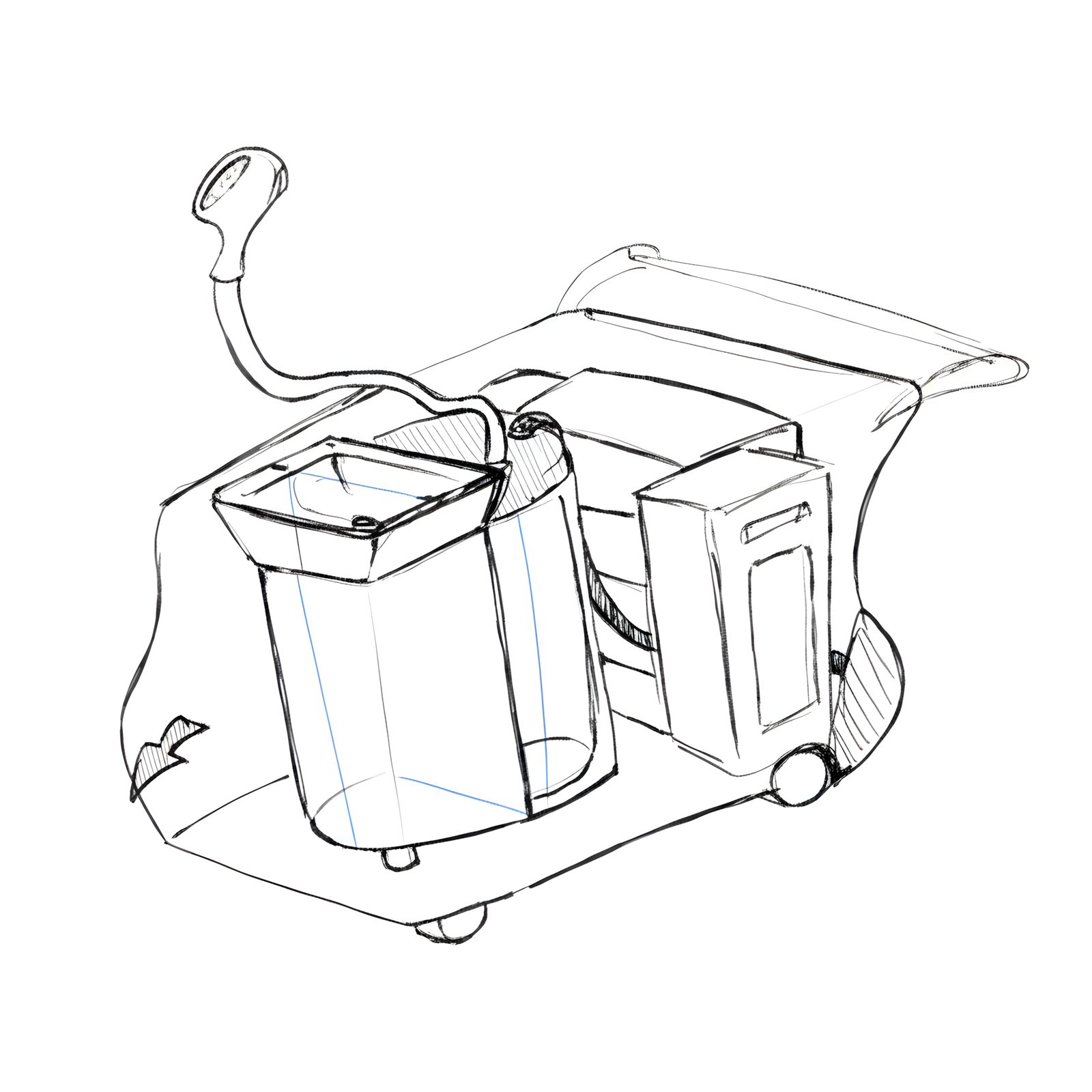
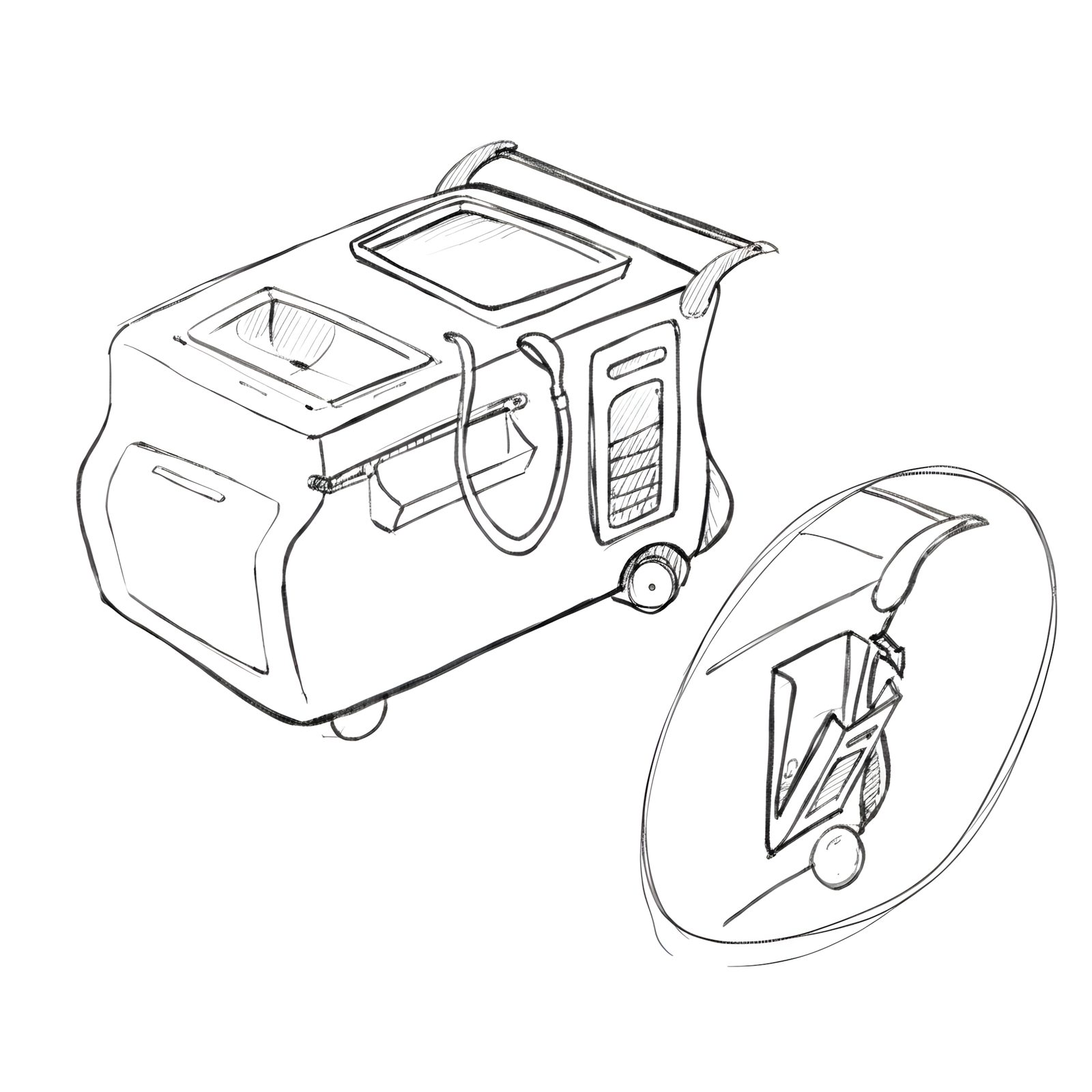
Pencil studies from our mechanism designer covered water tank placement, hose routing, waste compartment location. These were the engineering ground rules each form proposal would have to fit.
04 · CAD Evolution
From hand to CAD
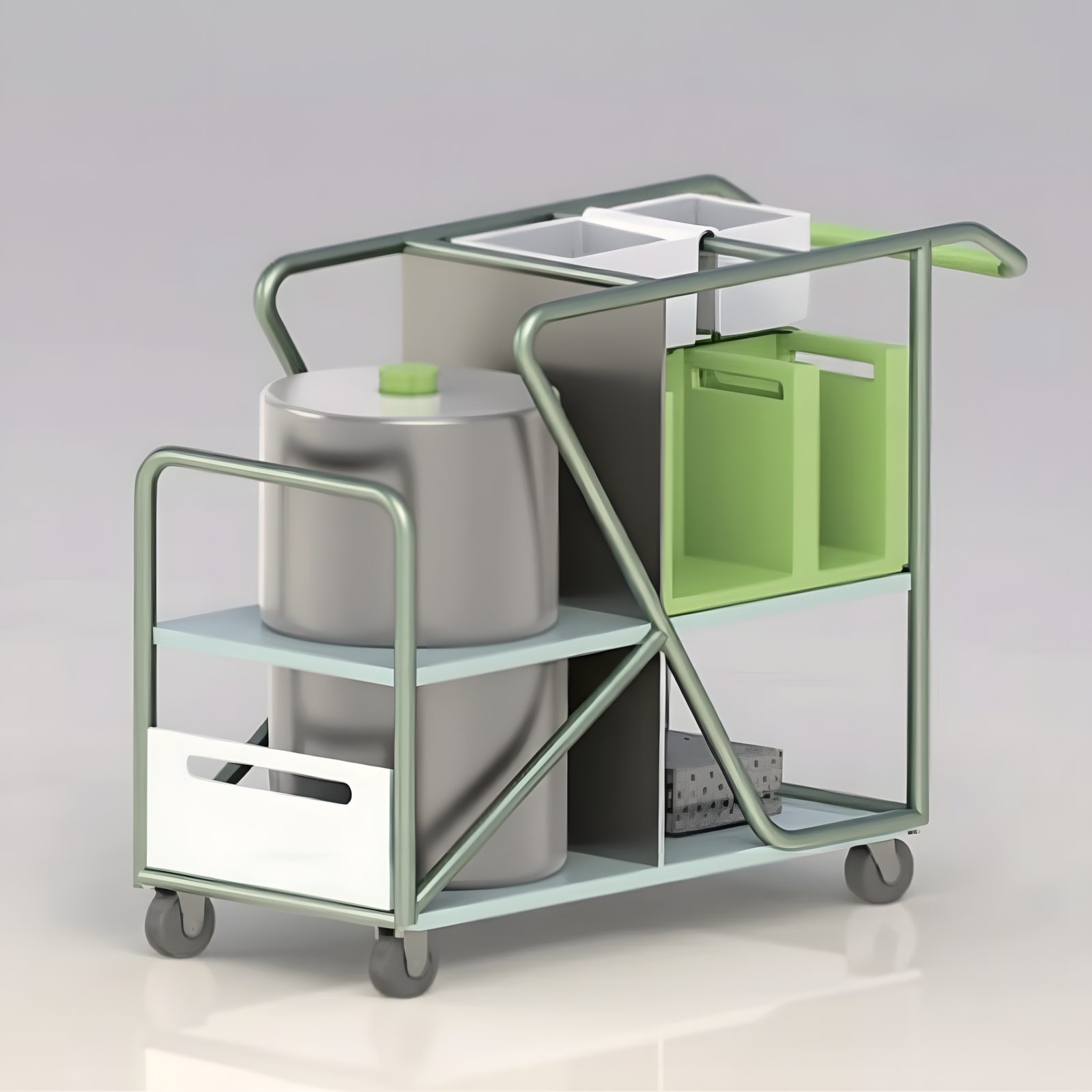
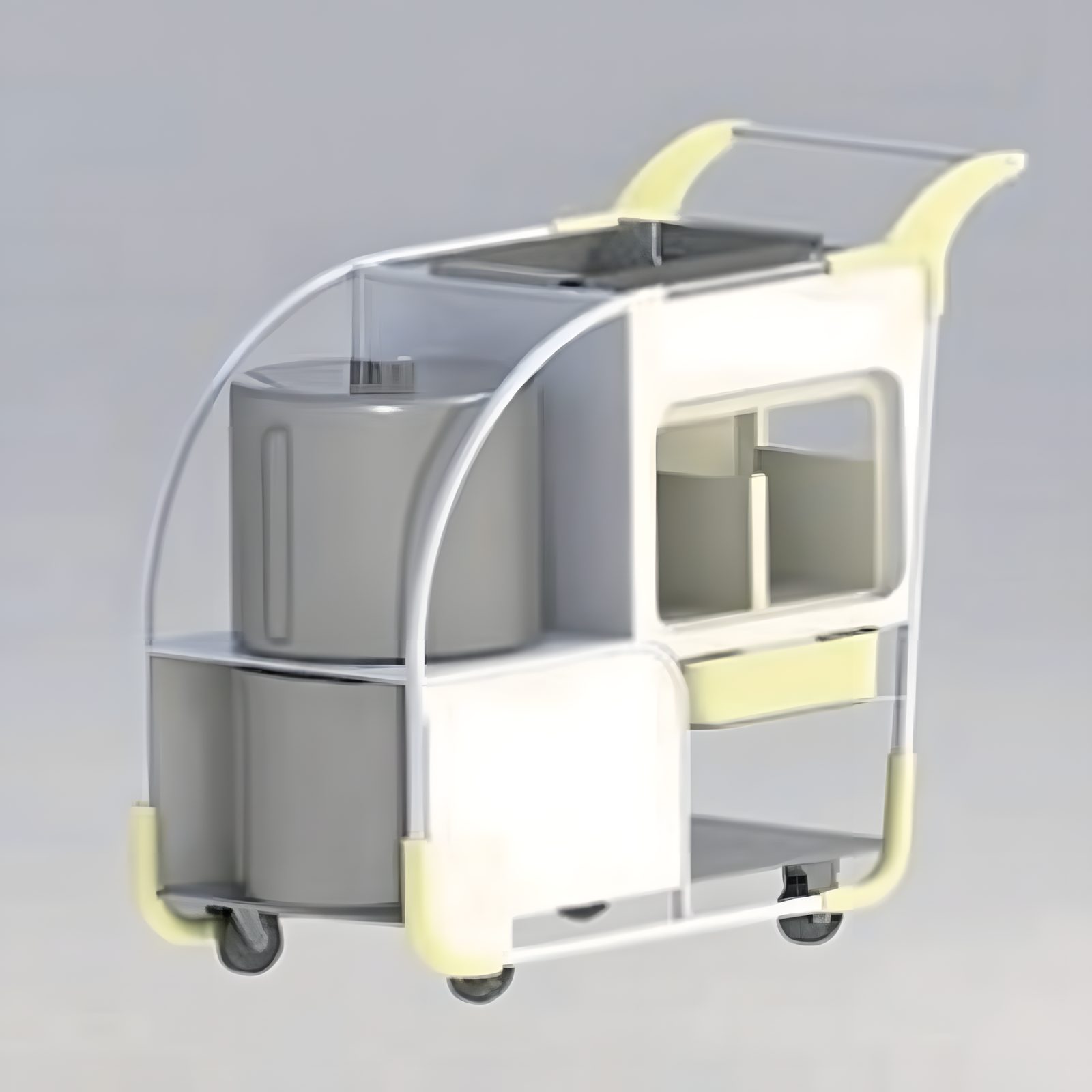
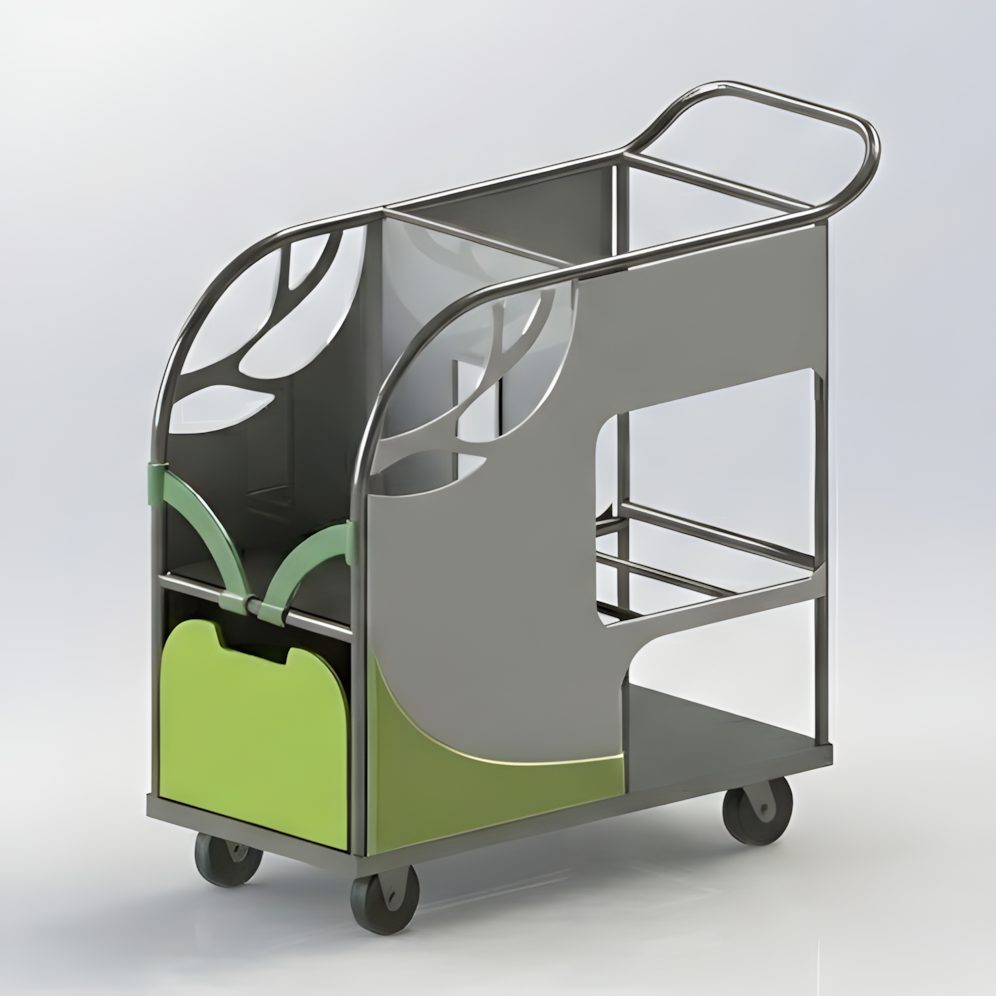
With the engineering ground rules in place, the form competition moved into CAD. Each of us built our own 3D version. The three directions below were the ones presented for internal crit. Mine was the one selected to carry through to fabrication.
05 · Built
Welded, mocked, painted
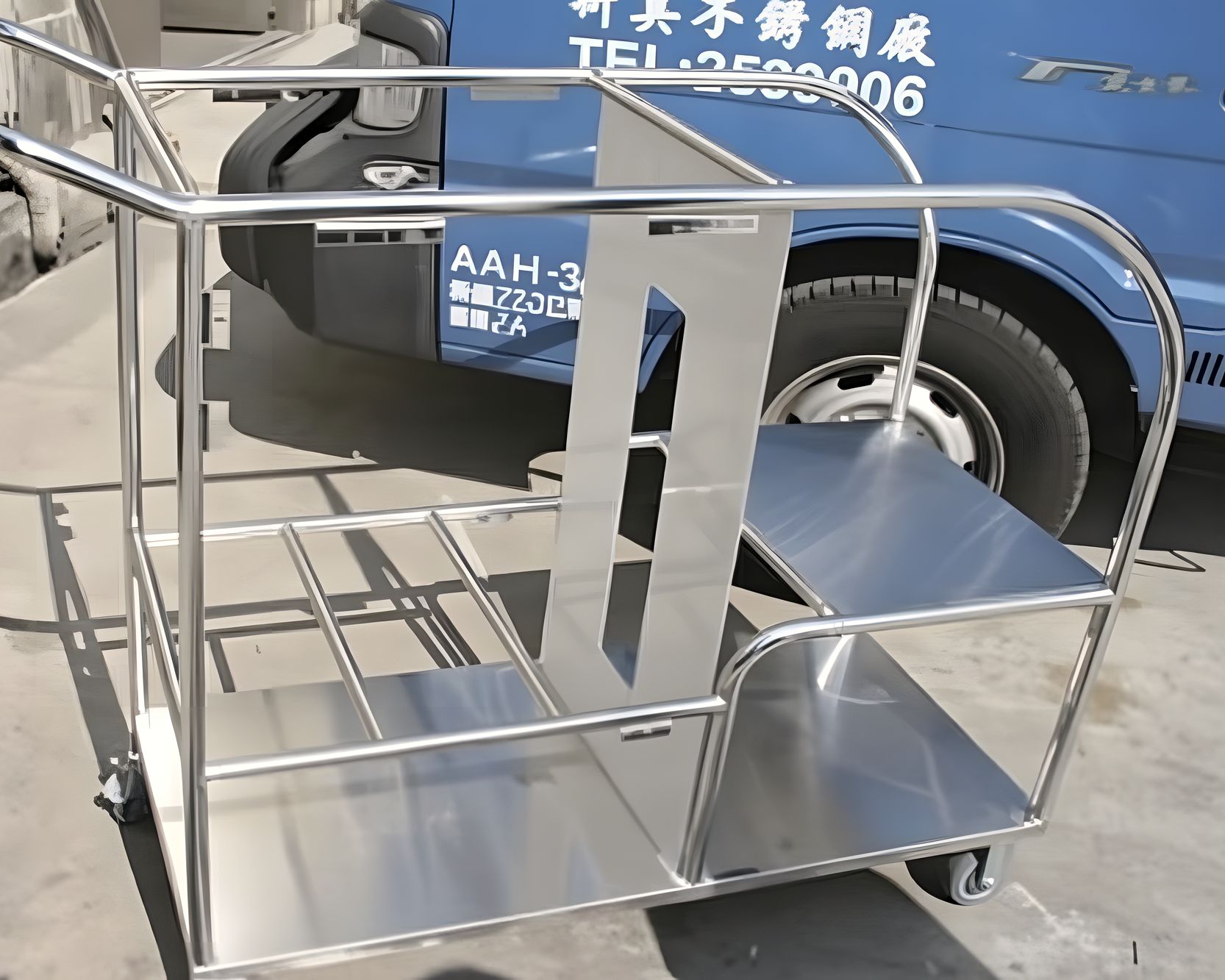
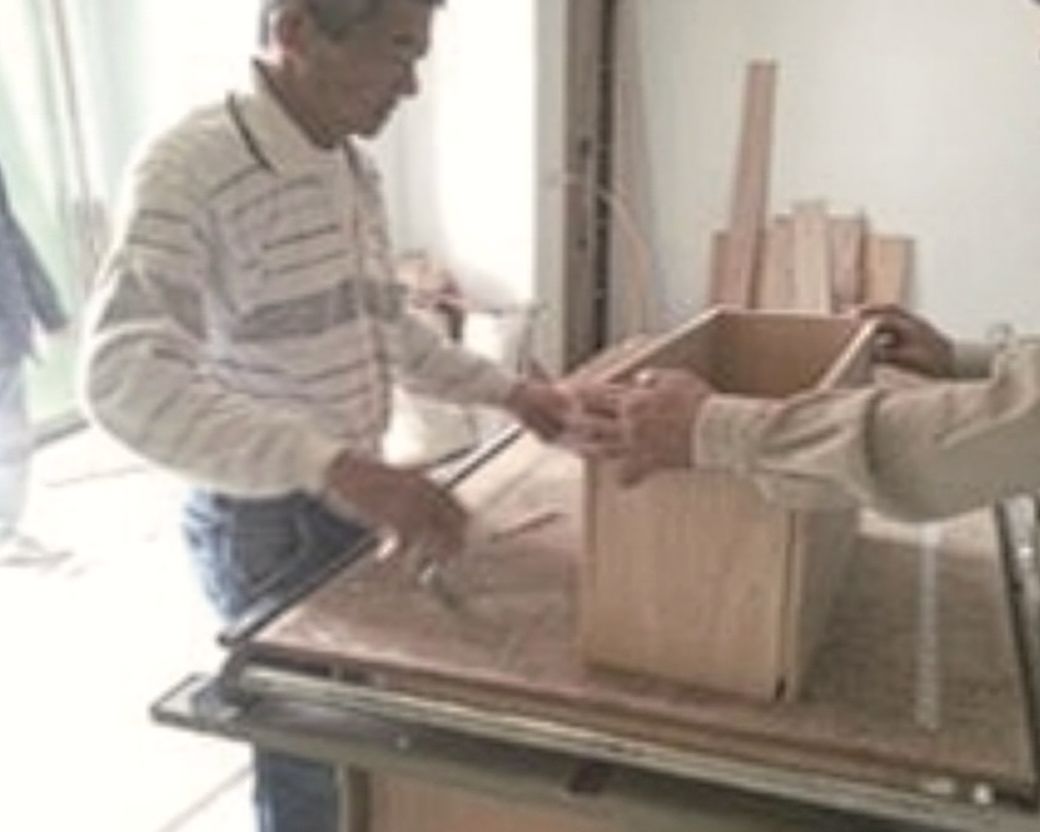
Fabrication was outsourced. The stainless tube frame was welded at a workshop near campus. The ABS exterior panels were CNC-machined to spec by a separate vendor. Assembly we did ourselves: fitting panels to frame, mounting hardware, the slow back-and-forth of part-against-part. Many things did not come back right the first time. Clearances missed, panels off by a few millimeters, mount points thinner than drawn. Each issue went back to the shop, came back again, and went into the next drawing.
06 · Finished
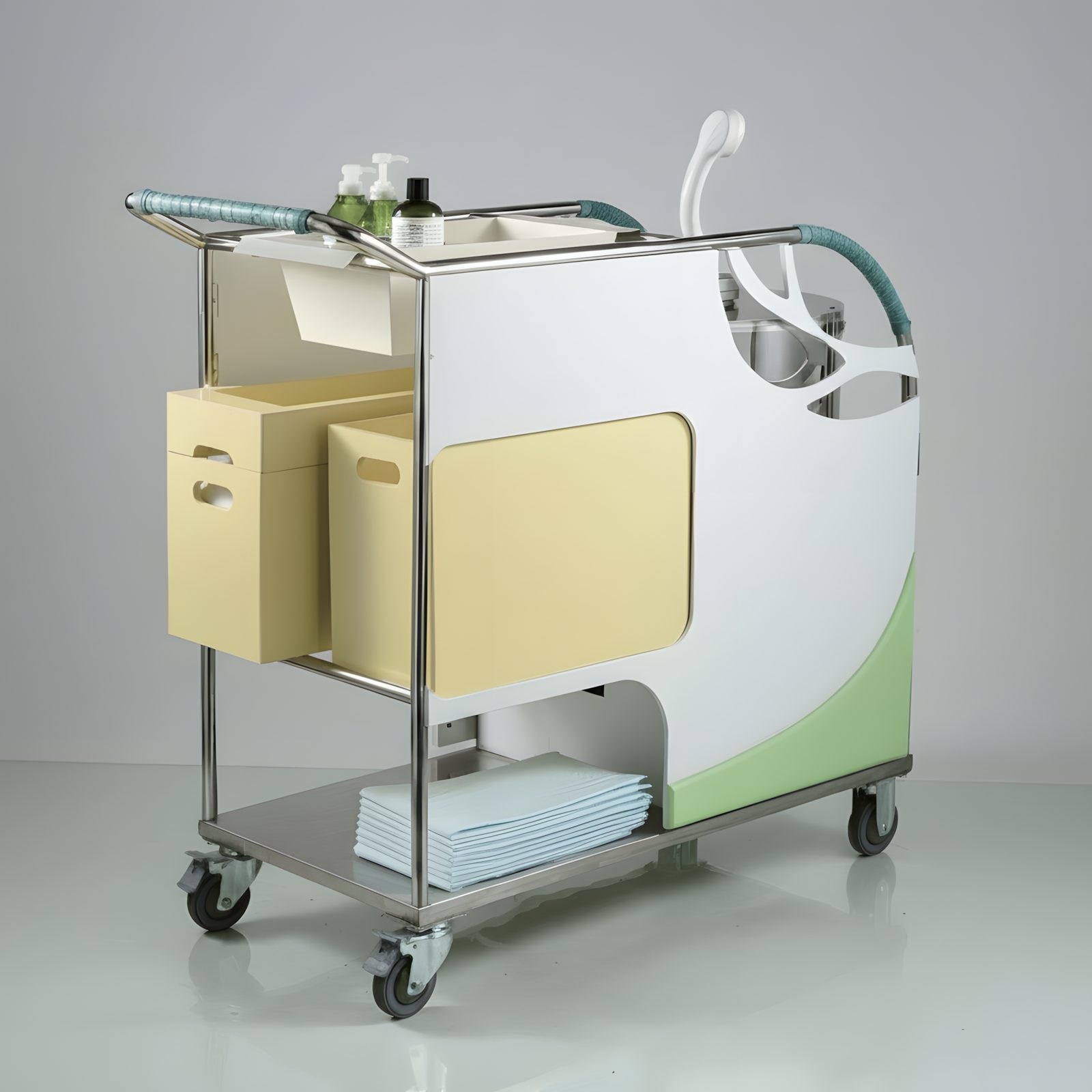
The cart, in studio
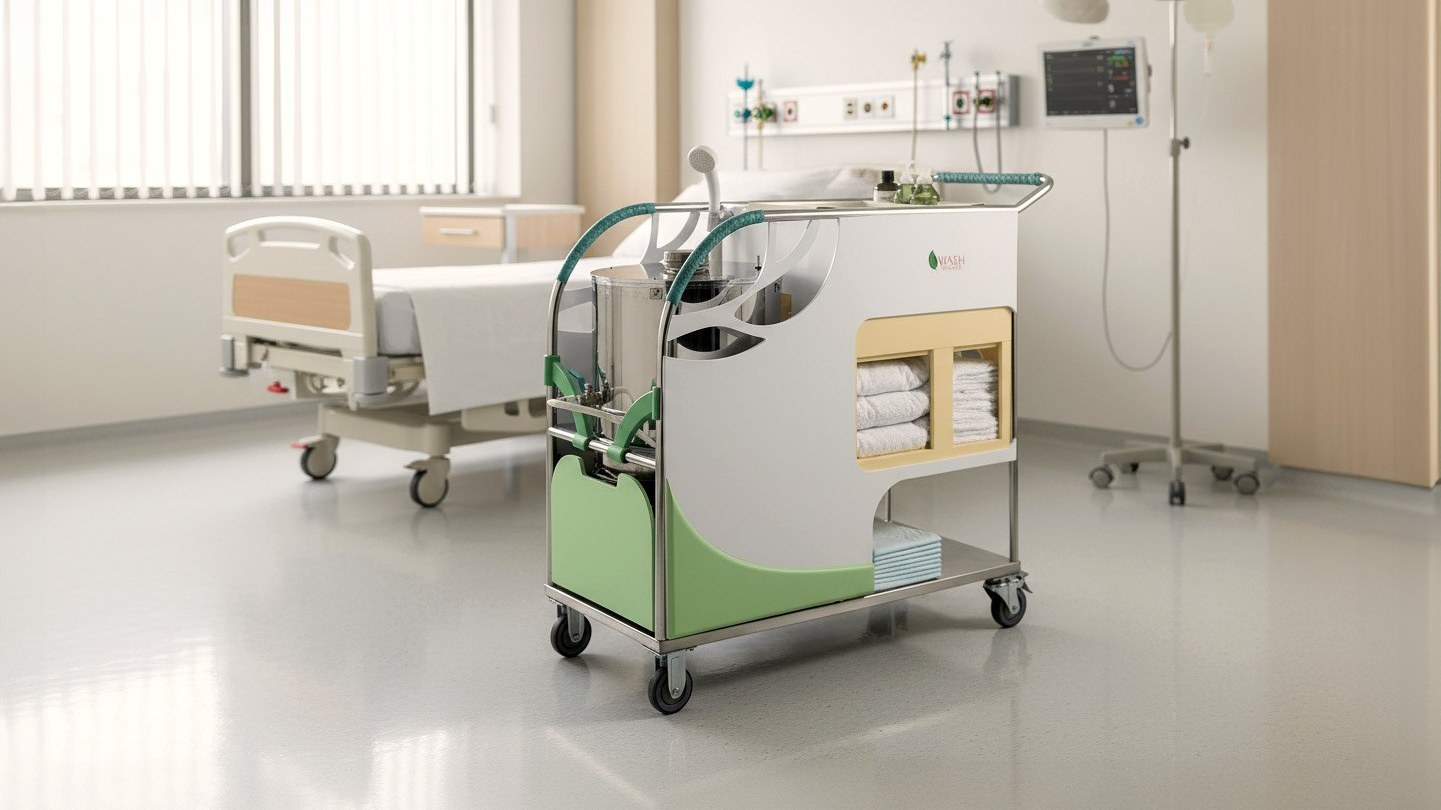
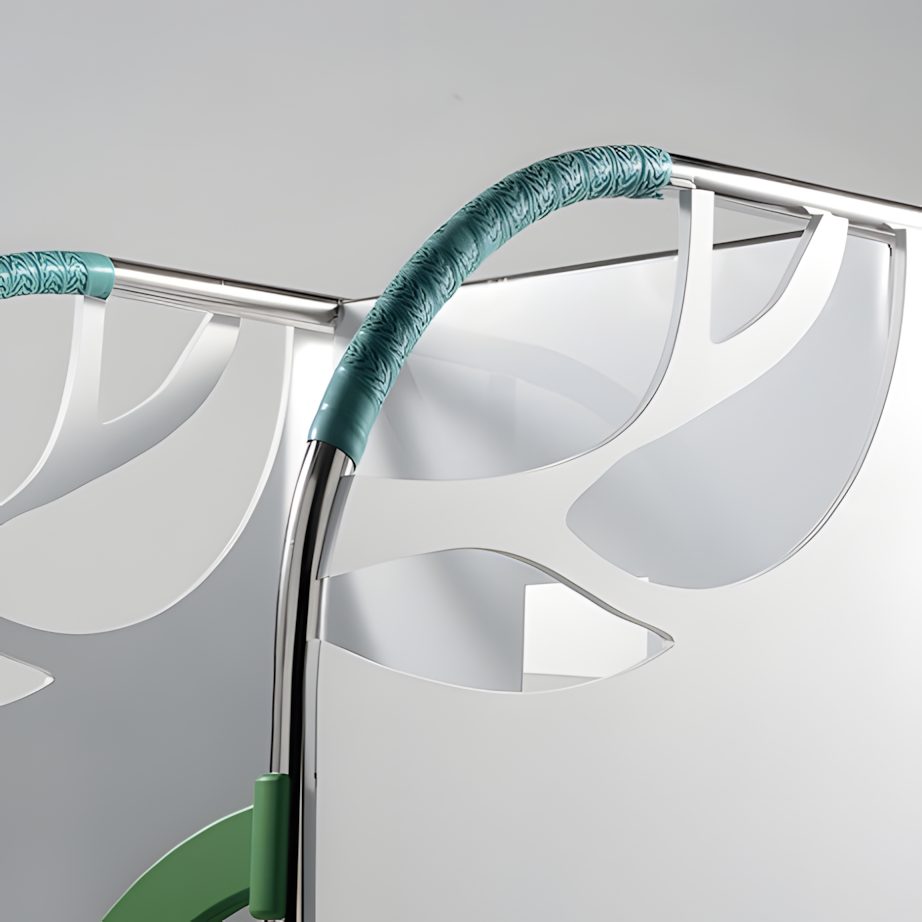
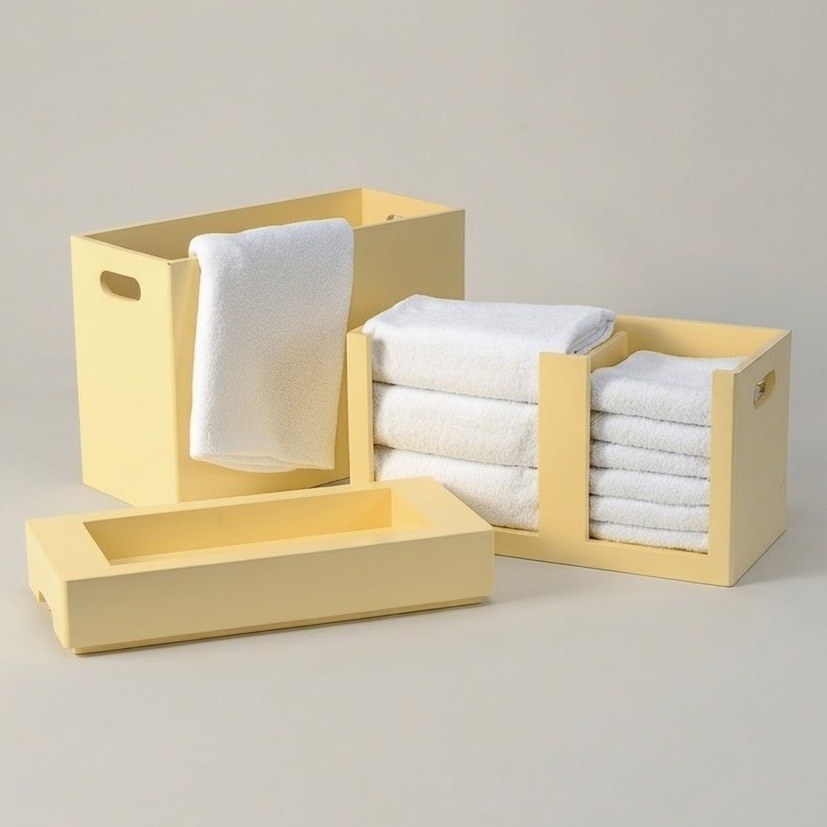
The finished cart, photographed in studio. Stainless tube frame, CNC-cut ABS panels, the proportions that survived a long series of revisions. The handle wrapped in green braid for grip. Yellow boxes for towels. A leaf-cutout structure carrying the identity into the form.
07 · In Use
Back where it started
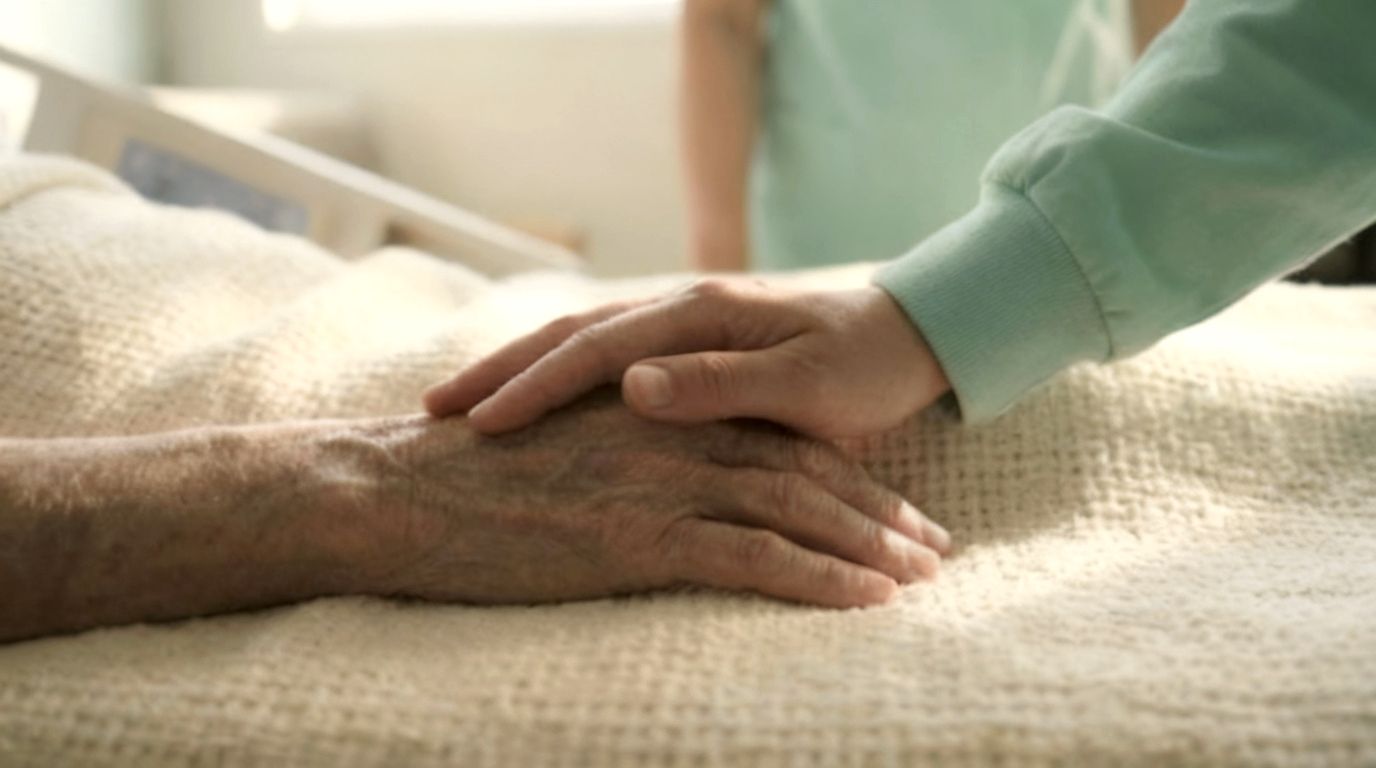
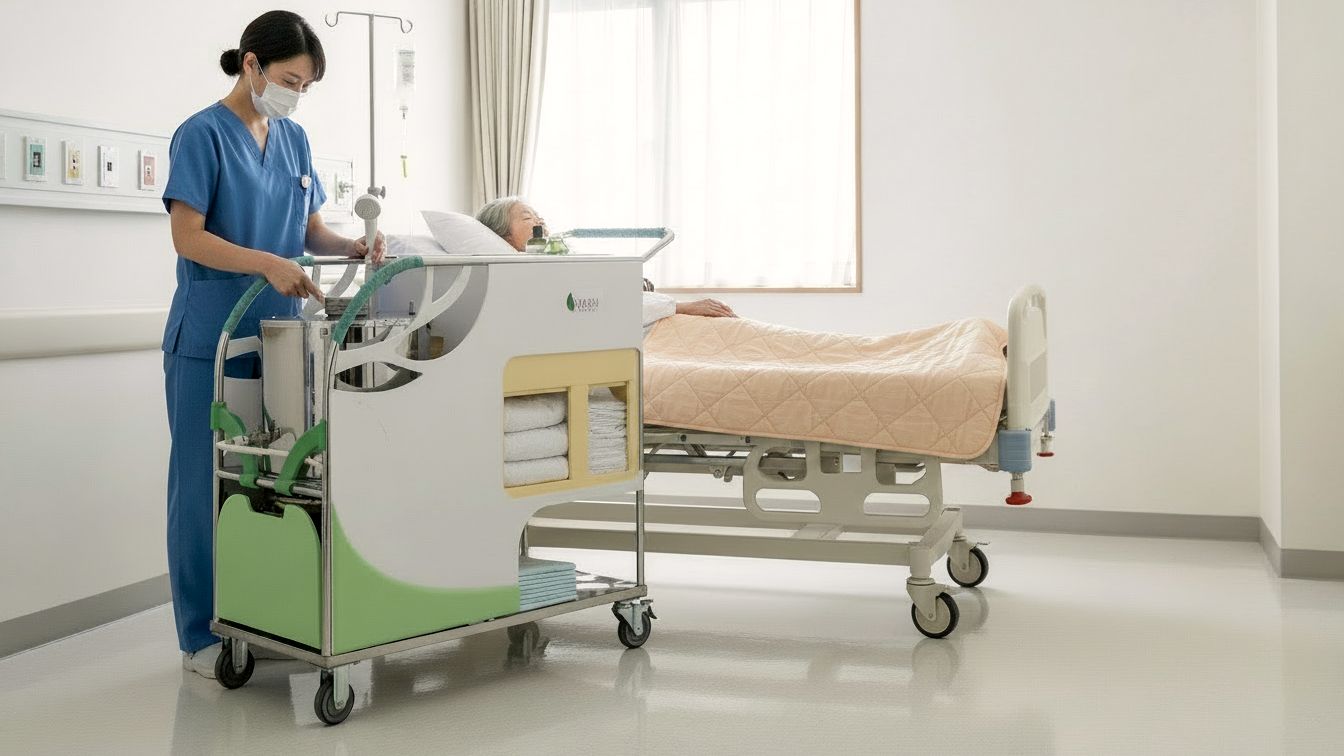
The cart returns to the place that asked for it — bedside, beside a body that cannot leave the bed. The drawings, the welds, the studio shots all collapse into a single moment of use.
08 · Reflection
What graduation taught me
Four of us made this — 廖沛怡, 蘇玟佩, 劉珽暄, and me as team lead and visual-design lead. Many of the things I drew did not come back the way I drew them. Bend radii the CNC could not reach. Clearances the welder needed. Mount points my silhouette had drawn thinner than they could safely be. Each issue went back into the next drawing, and into the next conversation with whichever shop was making that part.
The cart I drew at the start and the cart that rolled out of the workshop are not the same object. What graduation taught me is that the difference is part of the work, not the failure of it.
The prototype was shown at the senior project exhibition. Then we all graduated and went elsewhere — no production, no patent, no next iteration. A first project that taught me how to lead a build, then closed quietly.