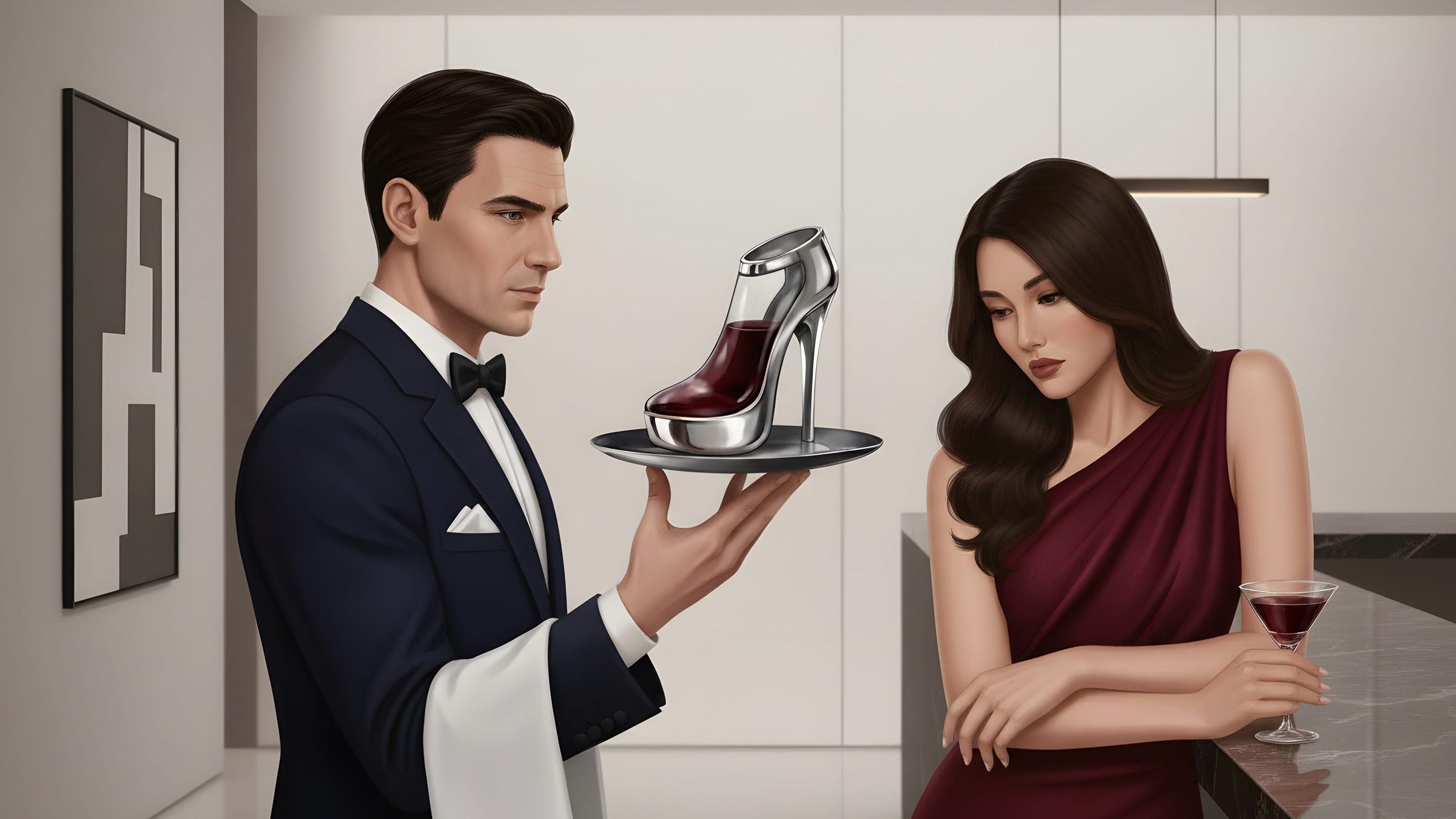
A butler offers a stiletto-shaped decanter on a tray to a woman in a red dress at a midnight bar.
Industrial Design · 2013

Midnight Hour 午夜時分

A measured wine decanter shaped as a stiletto. Tin body, glass inner tube, copper handle, acrylic cover. Siphon and counterweight to meter the pour: where chemistry and ritual meet a single object.

Year
2013
Semester project
Type
Measured wine decanter
Tin · Glass · Copper · Acrylic
Methods
Siphon + counterweight
Mechanical model
Project
Solo project
01 · Form

Why a stiletto?

A wine decanter shaped as a high-heeled shoe. The question lands before the answer does.

I drew it with Le Grand Tango on loop — Piazzolla, just discovered. Tango is a body knowing exactly when to push and when to pause. So is the body that drinks wine at midnight. The stiletto is that body's footing. The vessel takes the same shape: the platform becomes the base, the heel becomes the spout, the upper opens like a mouth.

Some forms only make sense in the soundtrack they were drawn under.
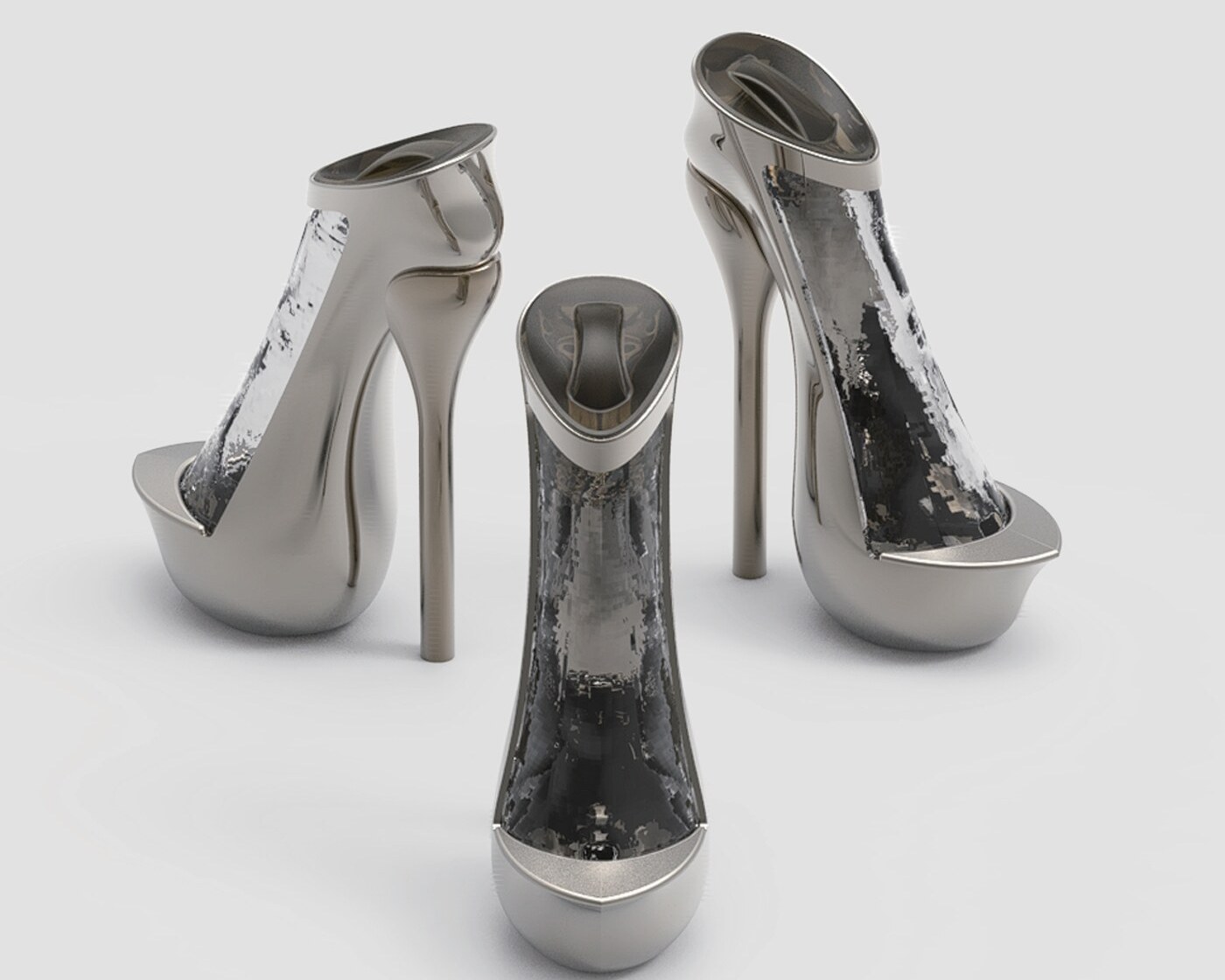
Three CGI renders of the silver-chrome stiletto decanter from front, side, and rear three-quarter angles, on a clean studio background.
02 · Brief

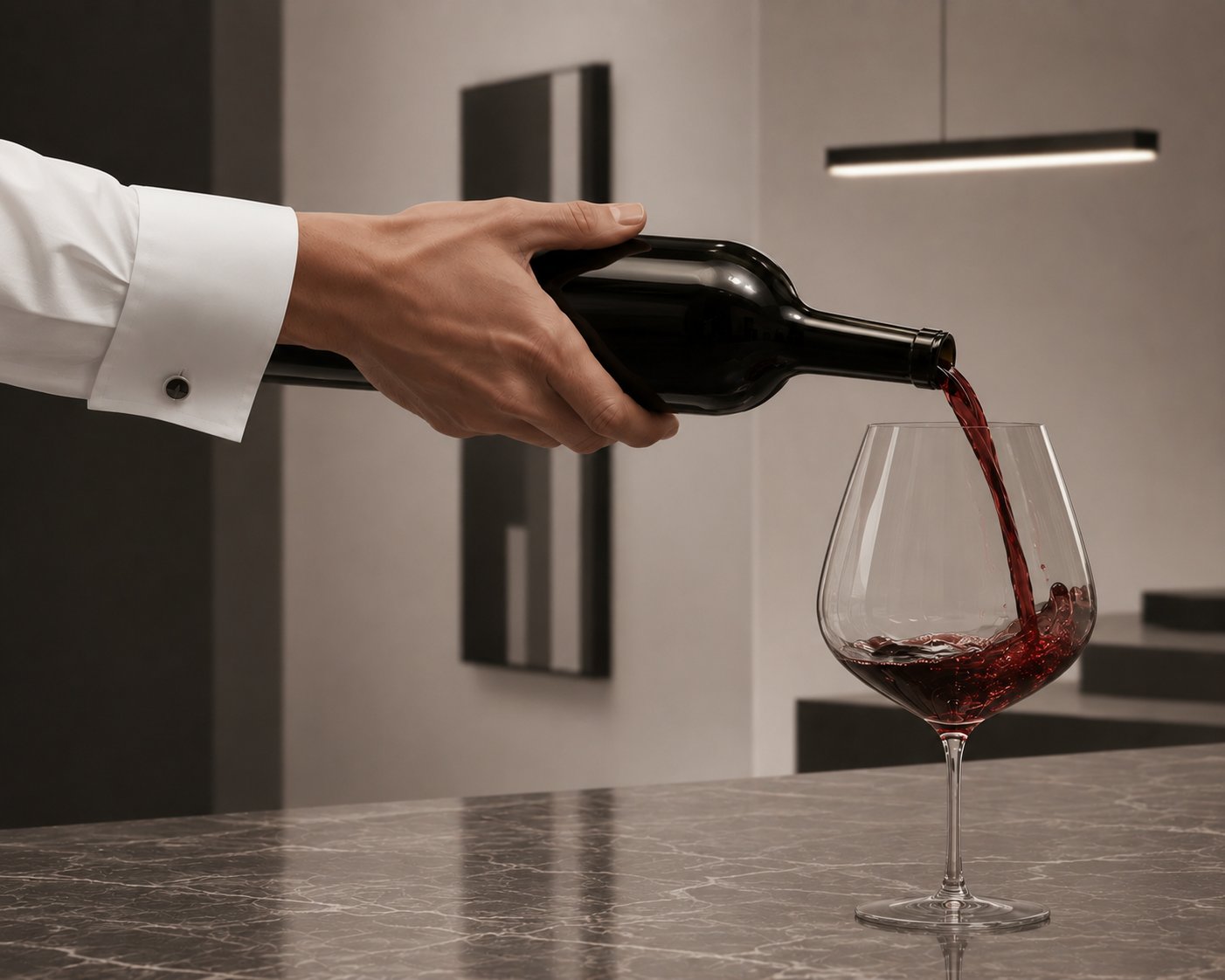
And why measure the pour?

Wine decanters separate liquid from sediment. They do not meter. Restaurant pours rely on a server's wrist for measurement, which is to say they rely on guesswork. This project asked what a decanter would look like if it knew the pour — exactly, every time, without thinking. A drinking ritual, made repeatable.

Editorial illustration: a sommelier's wrist tilting a wine bottle, a thin stream of red wine mid-pour into an empty crystal glass on a dark stone bar counter, modern minimalist setting with a linear pendant fixture overhead.
03 · Mechanism

How it pours

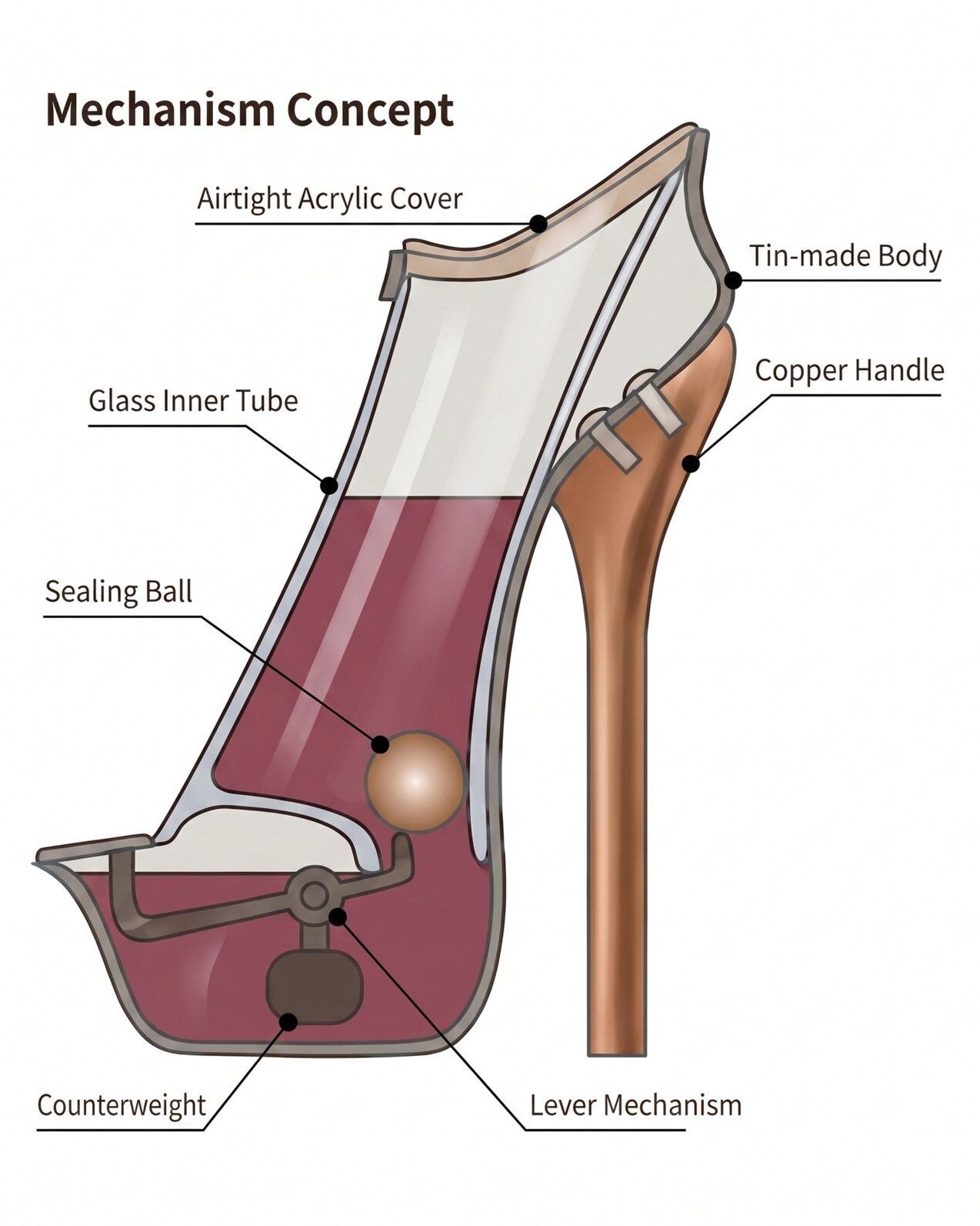
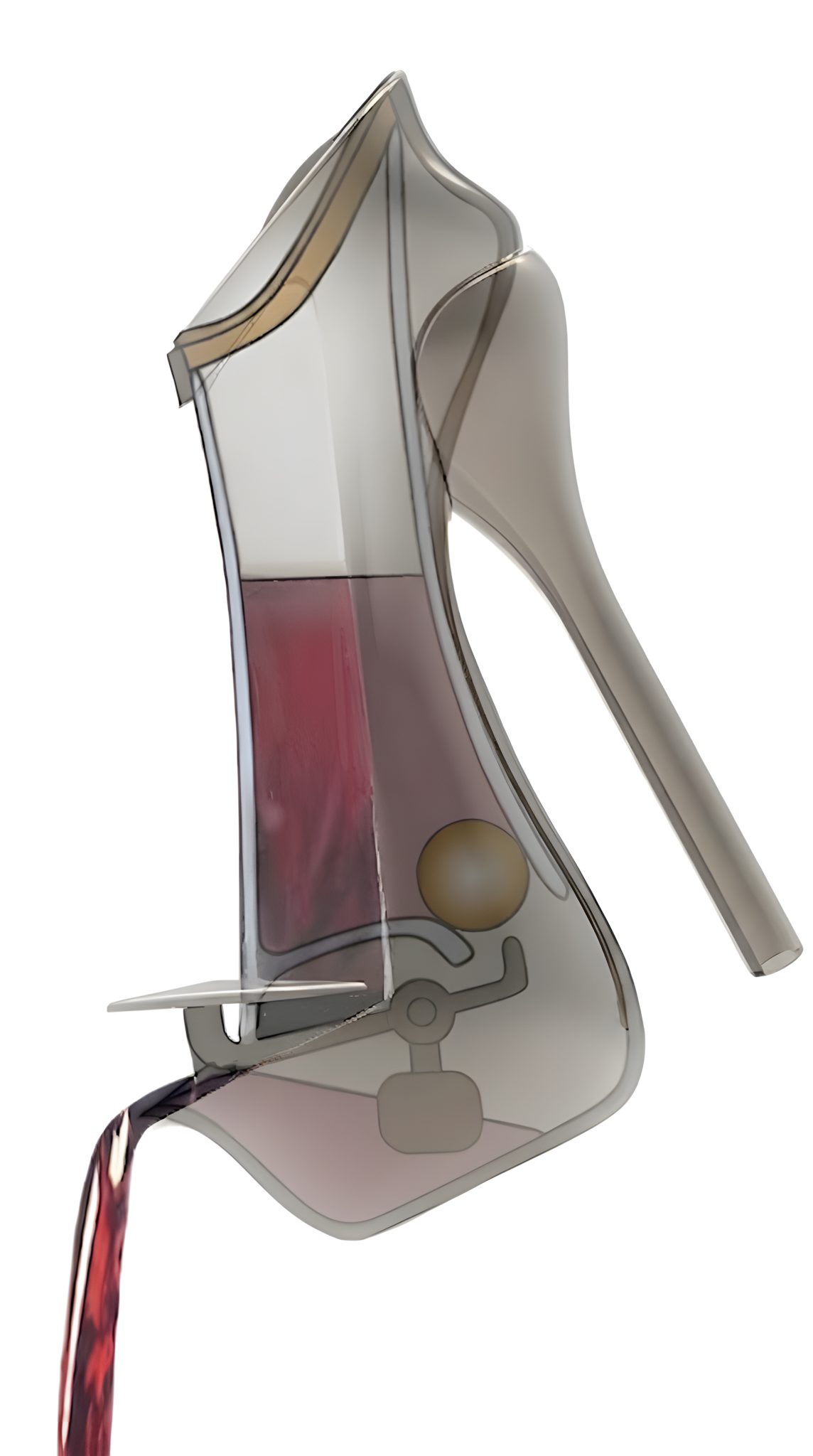
Inside, a glass tube acts as the siphon column. At the base, a counterweight on a lever. Tip past the metering angle: the counterweight rotates, the ball lifts, one measure flows from the heel. Tip back, the ball seats, the column closes.

Each material has one job. Tin for the body, its ions soften bitterness and amplify aroma. Glass for the inner tube, inert against what it holds. Copper for the handle, so the hand can read when the wine has cooled. Acrylic for the top, to seal out air.

Mechanism cross-section diagram with English labels: Airtight Acrylic Cover, Tin-made Body, Copper Handle, Glass Inner Tube, Sealing Ball, Counterweight, Lever Mechanism.
Cross-section render of the decanter mid-pour: wine inside the glass tube, sealing ball lifted, counterweight rotated, one measured stream flowing from the heel-spout.
04 · In Hand

Before the chrome

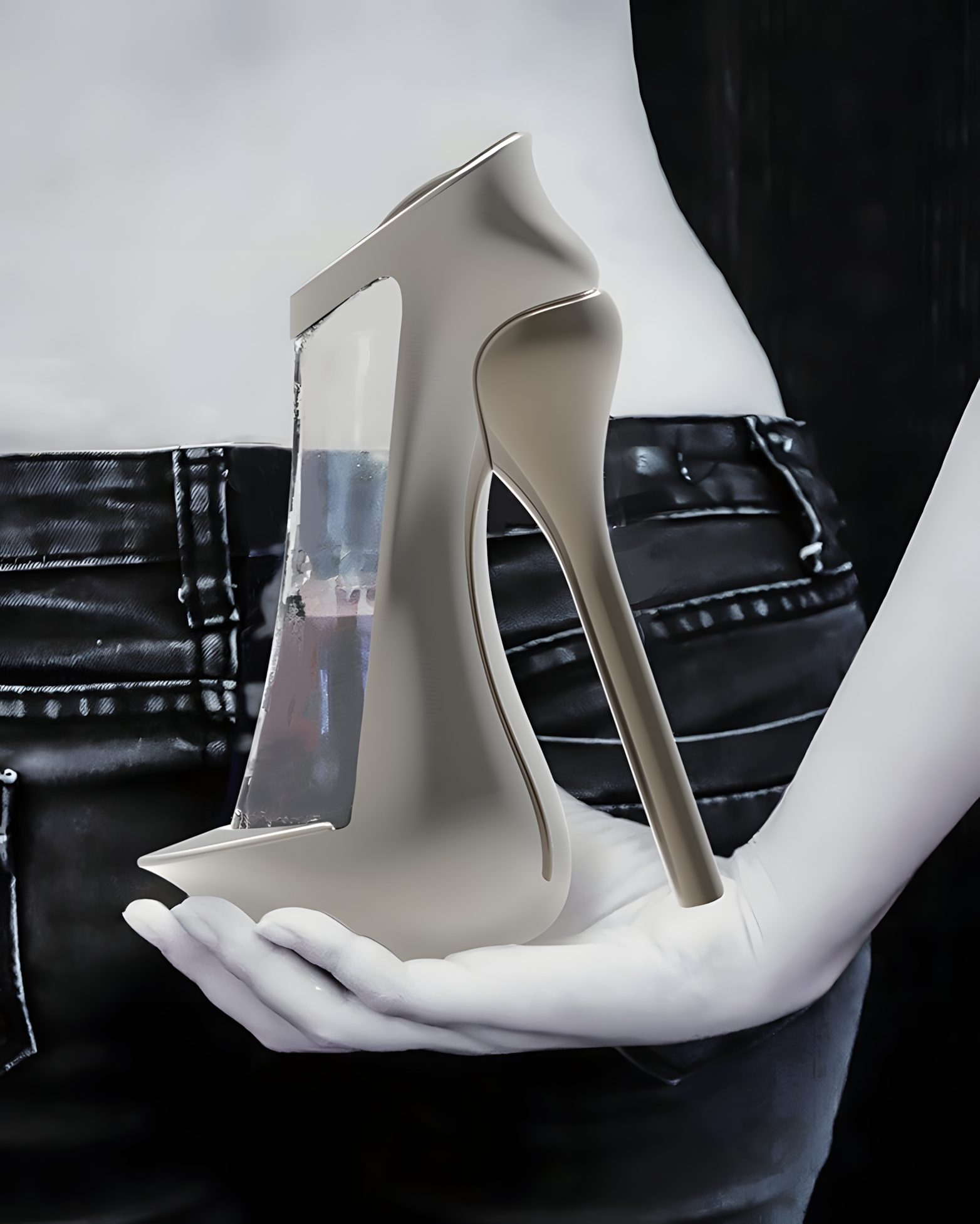
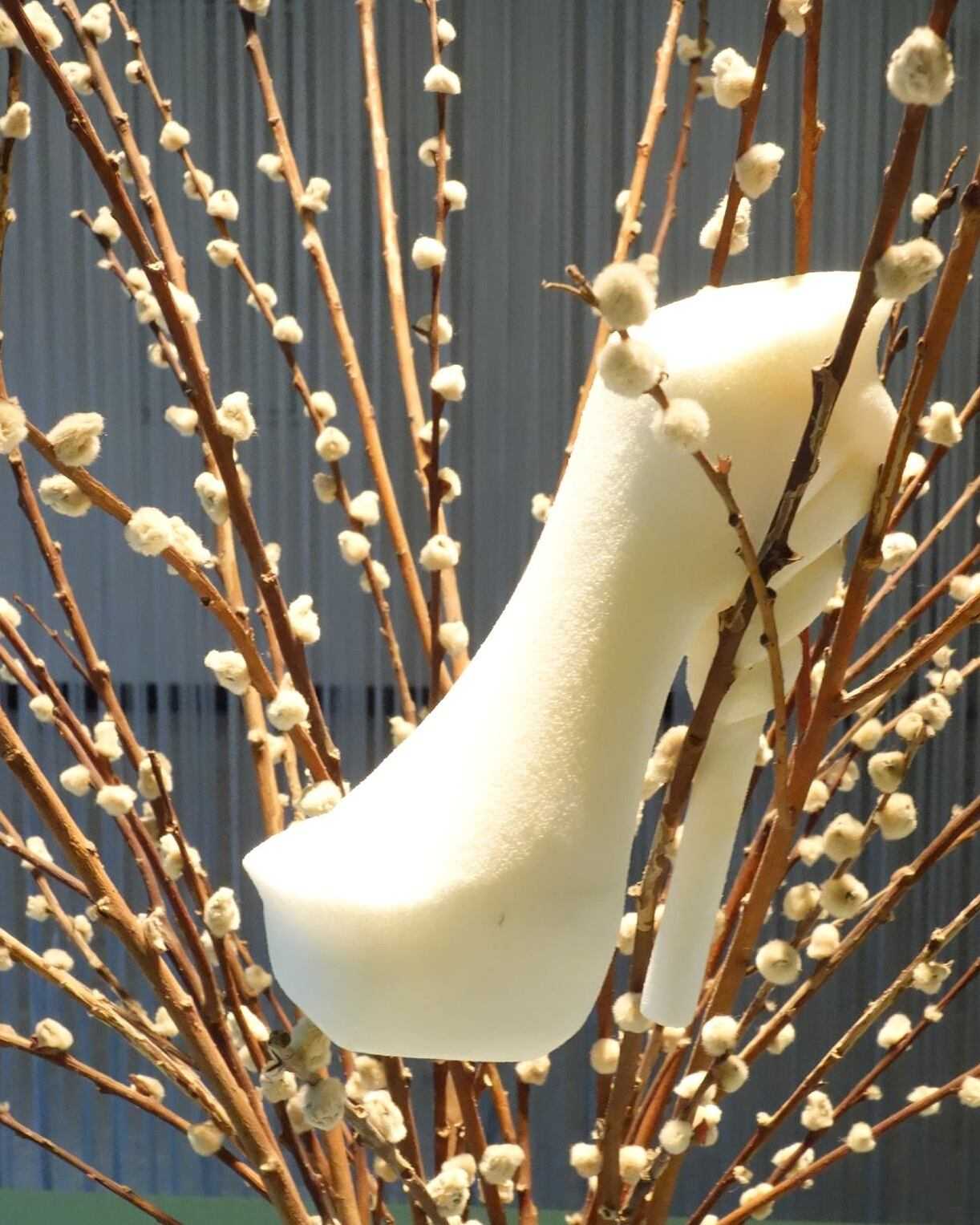
Before any of the chrome, the form was a buff PU model in a hand. Held to a body for scale. Set among dried catkins for stillness. The shape had to survive being touched before it could be rendered.

Cream-buff physical study model held in a hand against a person wearing dark jeans, showing the asymmetric heel-and-platform proportions at real scale.
The same cream-buff PU study model displayed among dried catkin branches, photographed at the school library after the model was finished.
05 · Reflection

Designing with science

This was the first project where I read chemistry before drawing form. None of it mattered until the shape gave each material a place to do its job. The form earns the chemistry rather than decorating it. That is what “designing with science” came to mean for me.