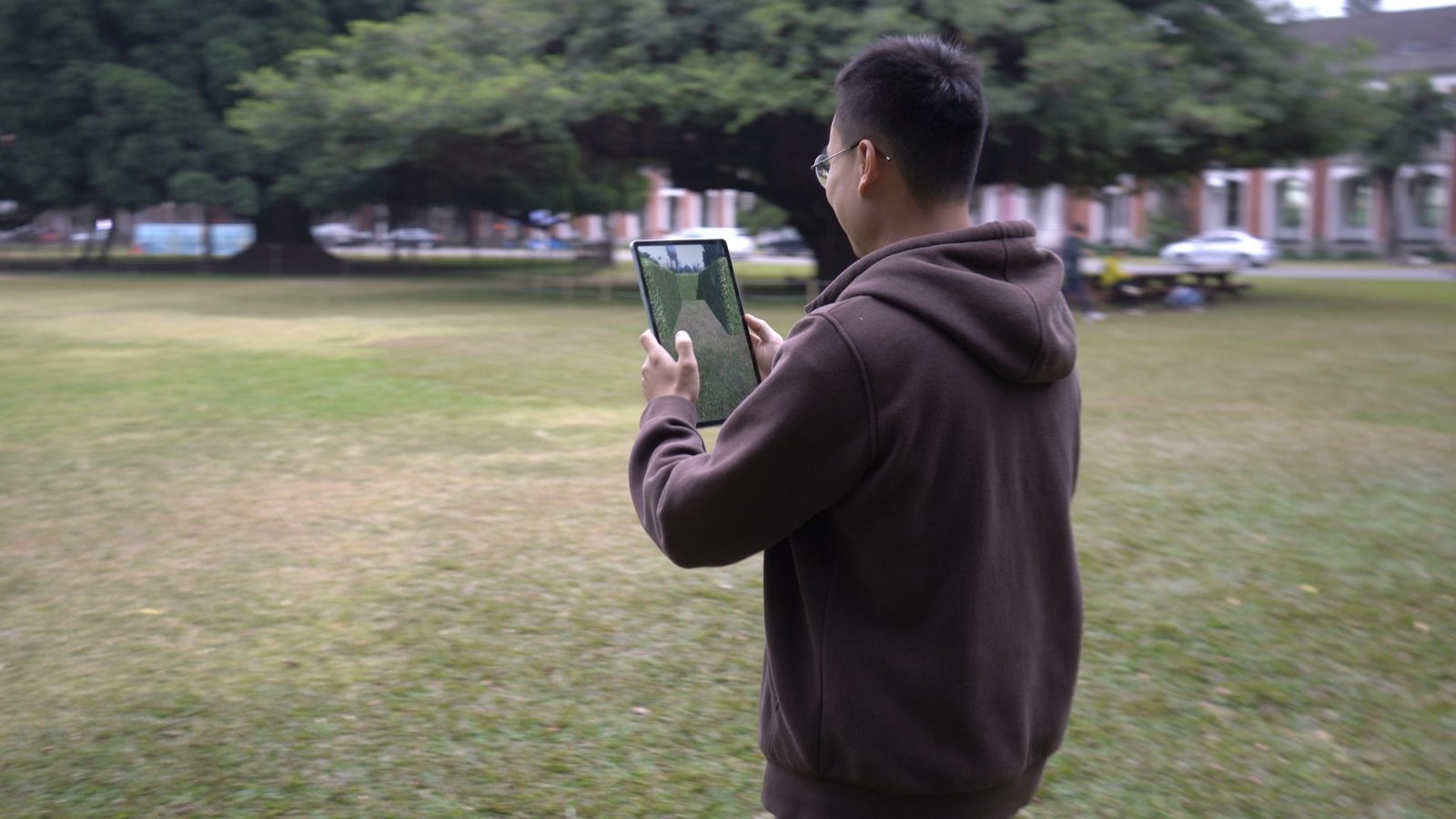
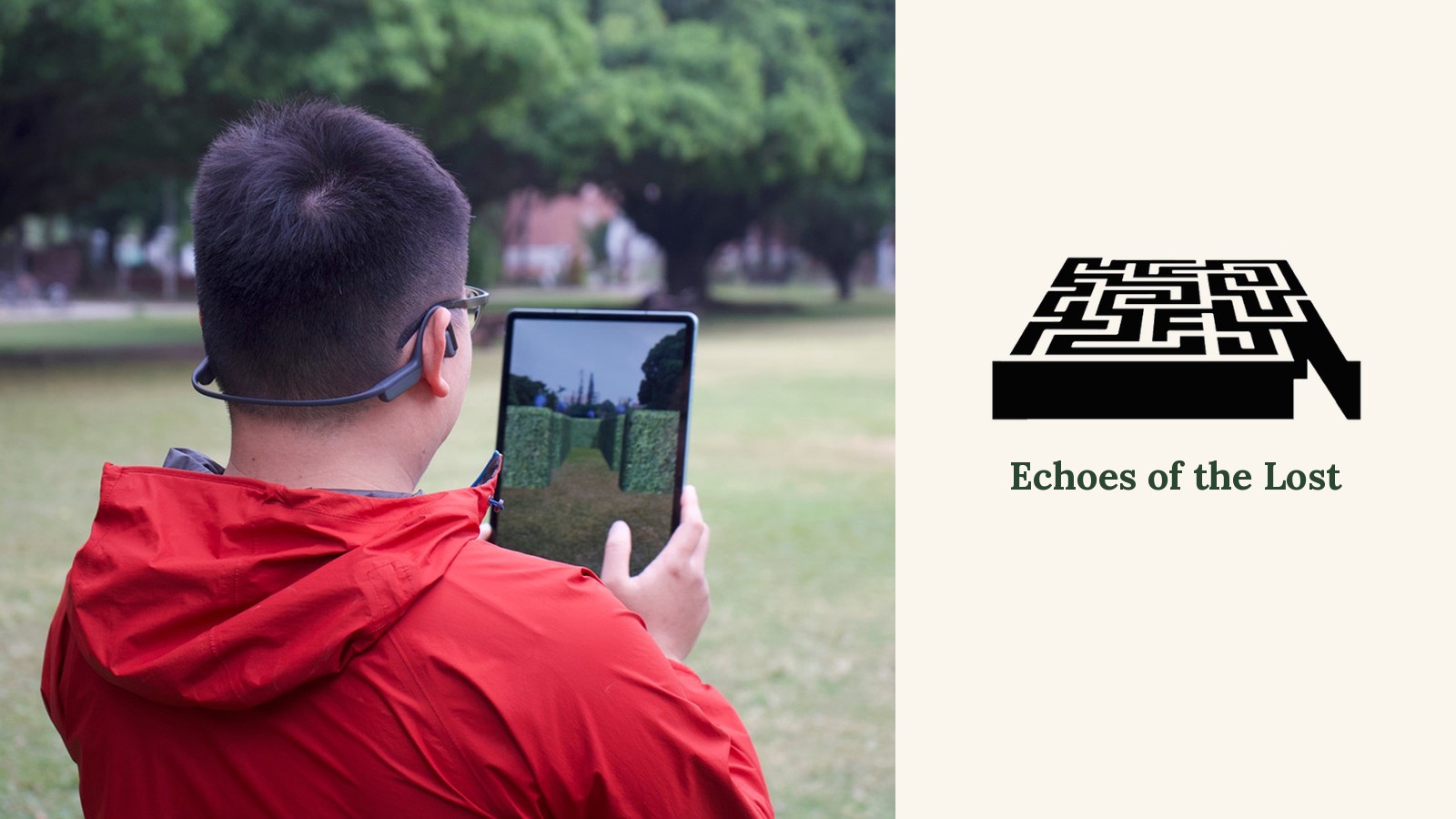
A tester at NCKU Banyan Garden viewed from behind, holding an iPad that shows a hedge maze overlaid on the real grass lawn. A massive banyan tree and red-brick dorm buildings fill the background.
XTDesign · User Research × PM · 2023

Echoes of the Lost 榕易迷路

An AR maze that turns NCKU’s Banyan Garden into a playable campus legend. Four months, four students across NCKU, walking through a Japanese-colonial ghost story on the real lawn.

Year
Sep–Dec 2023
4 months
Type
AR hedge-maze experience
site-specific, Banyan Garden
Methods
AEIOU field study
Unity · Vuforia · NavMesh
Project
Team project
Ku et al. (Dev Lead)
01 · Place

The garden was already telling a story.

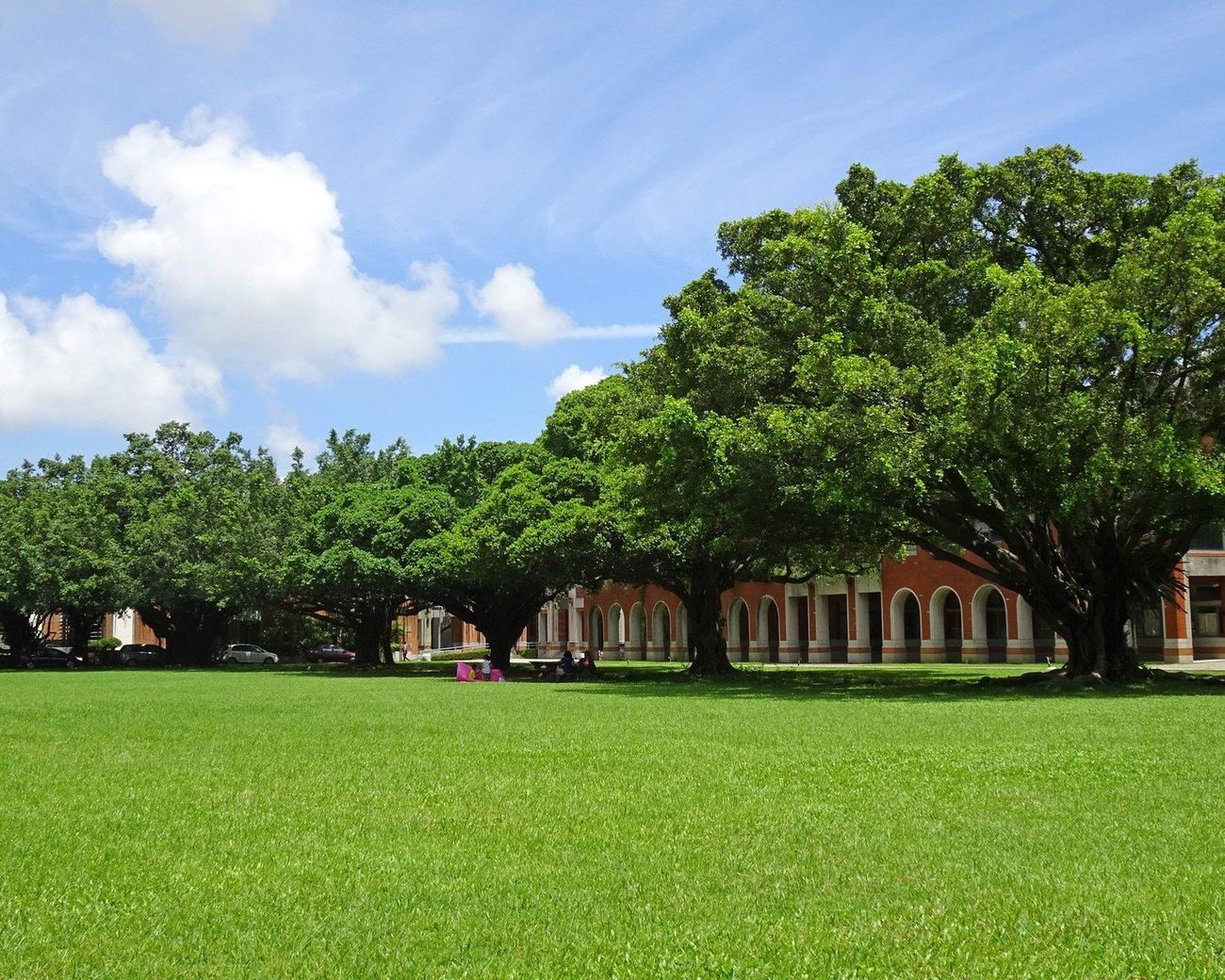
Banyan Garden sits at the heart of NCKU’s Guangfu campus. The grass is wide, the trees are old, and the surrounding red-brick walls used to belong to a Japanese colonial army barracks. Students cross it on the way to class. Families picnic on it on weekends. And somewhere underneath, a campus legend says soldiers who never came home still walk the same routines they walked a hundred years ago.

NCKU Banyan Garden on a summer day. A wide green lawn stretches across the frame; old banyan trees with broad canopies sit on either side; the red-brick arched buildings of the former Japanese colonial barracks line the far edge under a blue sky with scattered clouds.
Banyan Garden, NCKU Guangfu campus · photo via 成大素材網 (NCKU campus image archive)
02 · Field study

A weekend of AEIOU on a picnic mat.

Before we drew a single screen, the four of us spent a Saturday afternoon in the garden with a picnic mat and a notebook. The method was AEIOU (Activities, Environments, Interactions, Objects, Users), but the discipline was just to slow down and watch the place the way the place asks to be watched. No one led the pass; we kept four sets of notes and folded them into one shared list the next morning.

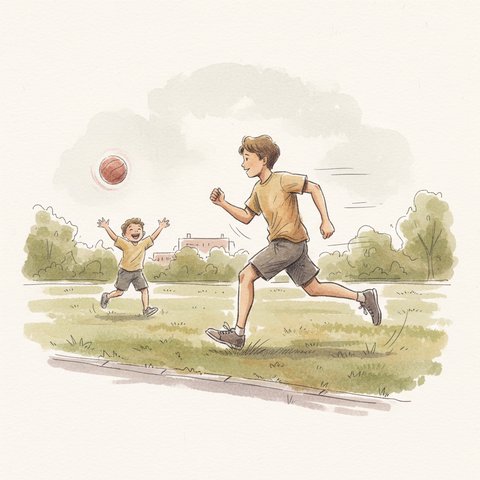
Observation-notebook sketch: a runner mid-stride on the banyan-garden grass perimeter, with a child reaching for a ball in the soft background.
A
Activities

Picnics in the late afternoon. Catch with kids after 3 PM. Running the perimeter. Lying-down was rare; most people stayed semi-active.

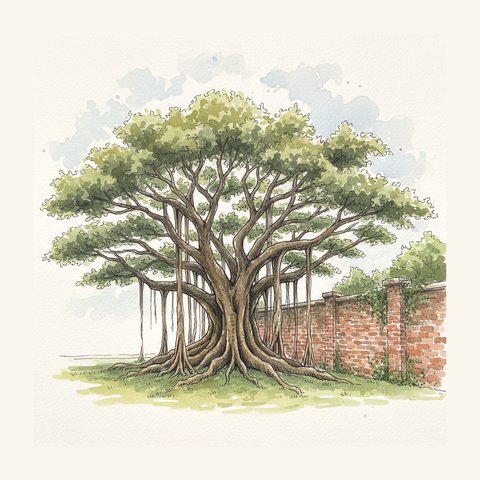
Observation-notebook sketch: an old wide-spreading banyan tree on the grass beside the red-brick perimeter wall, no people, cloudy afternoon.
E
Environments

Cloudy that day. Old banyan canopy, red-brick perimeter wall, grass bordered by trees. Calm, slow, slightly mysterious.

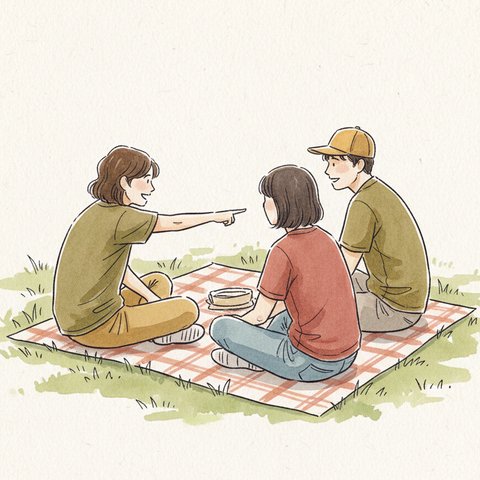
Observation-notebook sketch: three friends on a picnic mat leaning into conversation, no devices visible.
I
Interactions

Small conversation clusters. Families playing games. Groups walking together rather than alone.

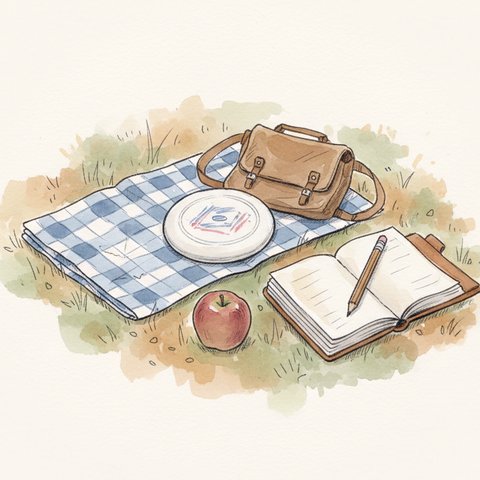
Observation-notebook still life on grass: a folded picnic mat, a frisbee, a small bag, an apple, an open notebook with pencil.
O
Objects

Picnic mats and yoga mats. Balls and frisbees, the occasional kite. Bags and phones on the grass, present but quiet.

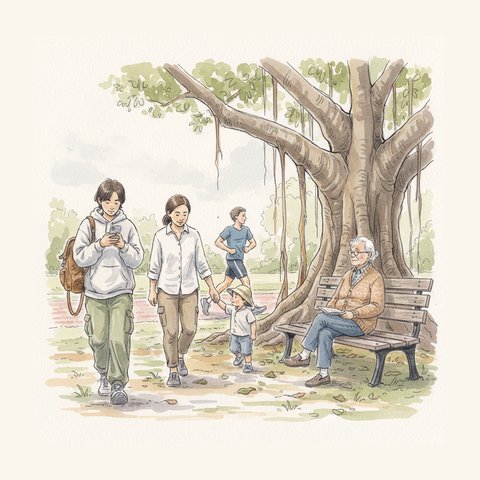
Observation-notebook sketch: four banyan-garden visitors in a loose group — a student with backpack, a parent and child, a jogger, and an older neighbour on a bench.
U
Users

Students between classes. Parents and small kids. Runners. Older neighbours watching from the benches. A wide mix.

03 · Bridge

Three findings, three design decisions.

The AEIOU pass produced a list of small observations. We didn’t try to act on all of them. The three with the clearest design consequence read as: what we saw on Saturday → what it asked the game to do on Monday.

Observation
The garden has a slow pace. People sit, walk, picnic. Almost nobody hurries through.
Implication
The game pace had to be slow too. Story beats unfold by walking. The timer is generous (10 minutes). No twitch reflexes required.
Observation
The objects that animated the day were body-cuing ones: balls, frisbees, picnic mats. Tools that drew people into space rather than away from it.
Implication
Position the AR app as the same kind of tool. The game makes no progress unless you actually walk. A healthy digital interaction is a medium that triggers exploration of the world, not a shackle that binds attention to itself. The phone here is closer to a frisbee than to a screen.
Observation
The user mix was wide: students, kids, runners, elders. No single user model would cover it.
Implication
Design for the lowest skill floor. Difficulty stays gentle. The 10-minute cap is a promise the family can finish.
04 · Curtain up

The first three screens.

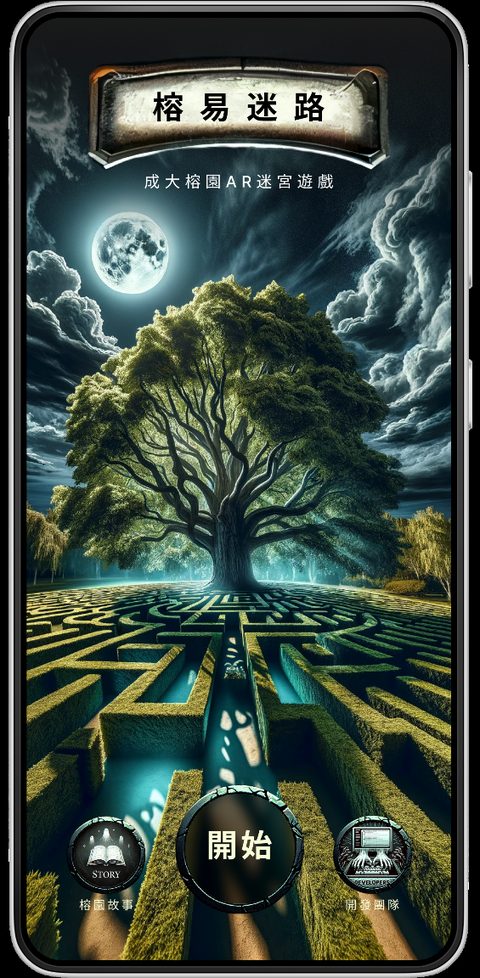
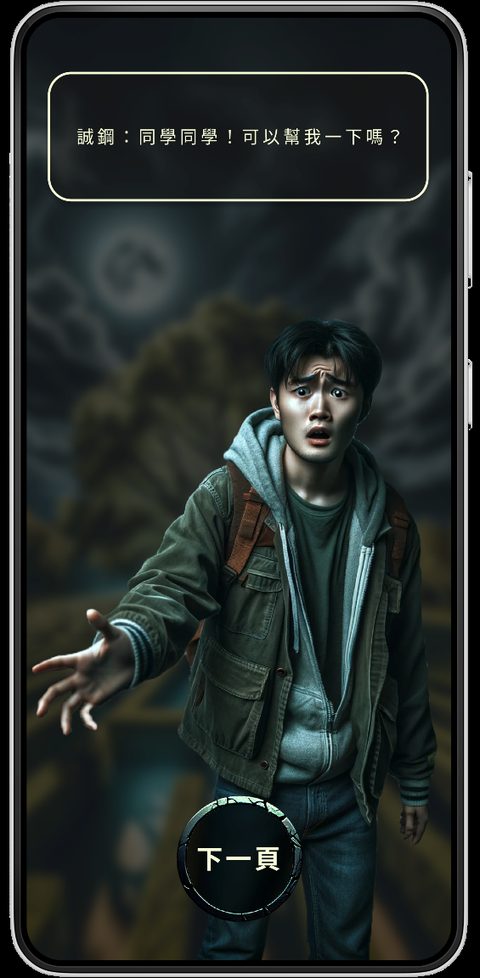
Title card. Legend page. The friend’s call for help. Then the maze.

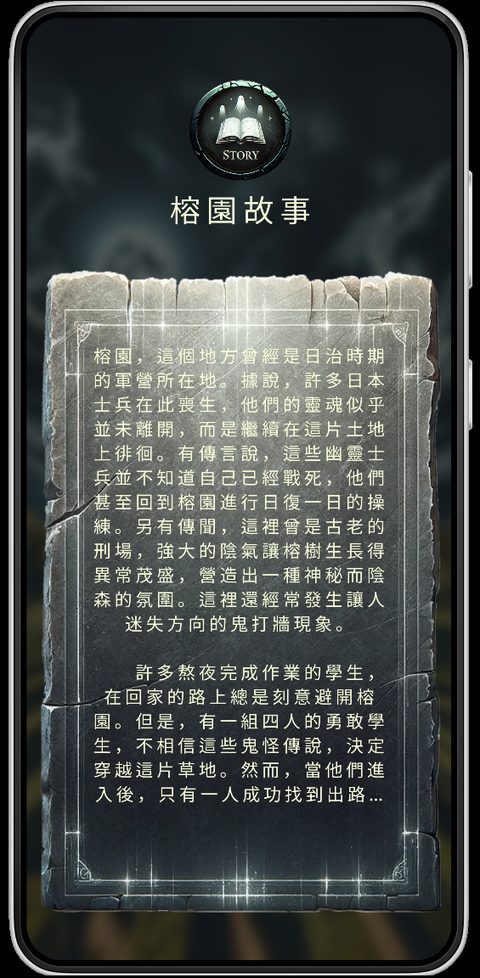
These are the three screens the player meets before the camera lifts and the AR layer lights up. The build front-loads the story so the maze isn’t a puzzle from scratch. By the time you press into the lawn, the legend is already pulling. The splash hands you the mood, the scroll hands you the why, 誠綱 hands you the task. The maze inherits all three.

榕易迷路 splash screen — a giant banyan tree above a glowing maze under a moonlit sky, with 開始 (Start) and 榕園故事 / 開發團隊 buttons at the bottom of the phone.
Start screen
榕園故事 legend page — a parchment scroll on a dark cloudy background, holding the long campus-legend text in vertical Chinese.
Legend page
誠綱 the NPC stands in a misty wooded scene, a hand reaching forward, dialogue bubble above reading 同學同學!可以幫我一下嗎?(classmate, classmate, can you help me?).
誠綱’s call
05 · Story

A legend turned into a path.

We were given an open brief to make an AR experience for NCKU. The four of us tossed concepts around for a week. Mine was the one that landed. A real maze on the real lawn, with the campus legend as the through-line. Once the frame was set, the story we’d amplify came together quickly.

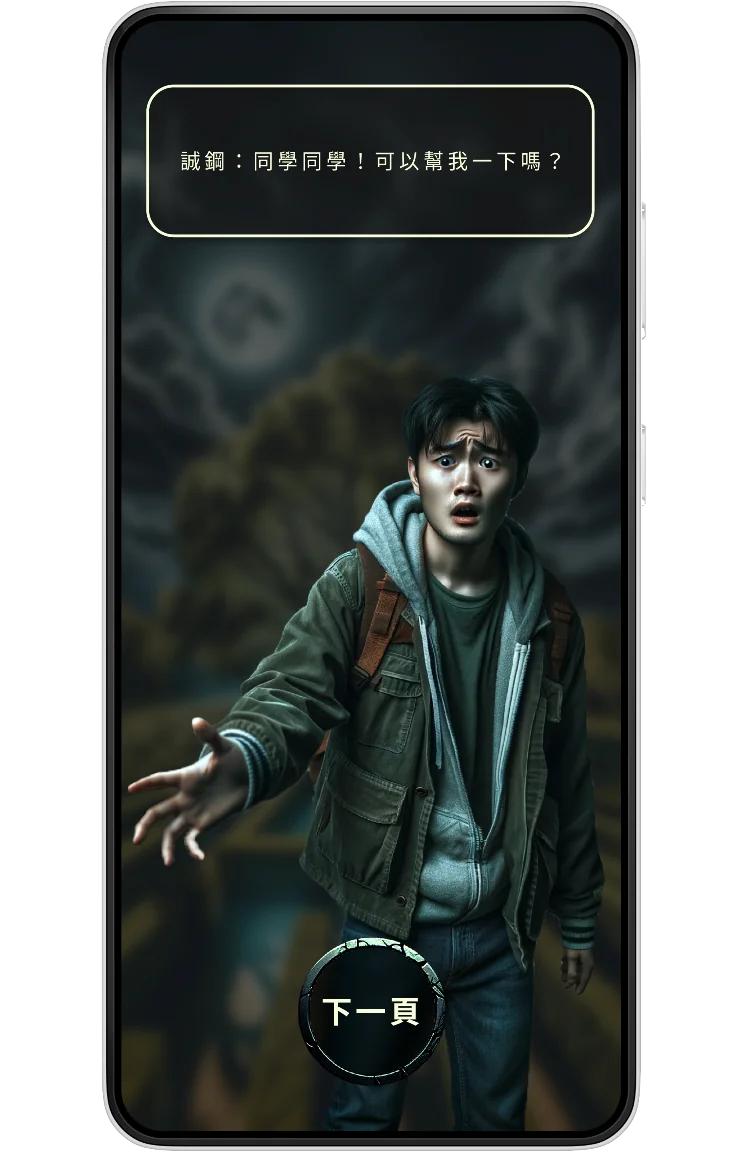
In the colonial era, Banyan Garden was a Japanese army training ground; the legend says the soldiers who died here don’t know the war ended, and still drill at dawn along the routes they always marched. 林翊麒 wove these stories that 郭亭妤 had been collecting into a single arc: the player meets 誠綱 near the garden, agrees to help find his missing friend 家豪, and has ten minutes to walk him out of the AR maze.

誠綱 the NPC reaches a hand forward in a misty wooded scene, dialogue 同學同學!可以幫我一下嗎?
The call
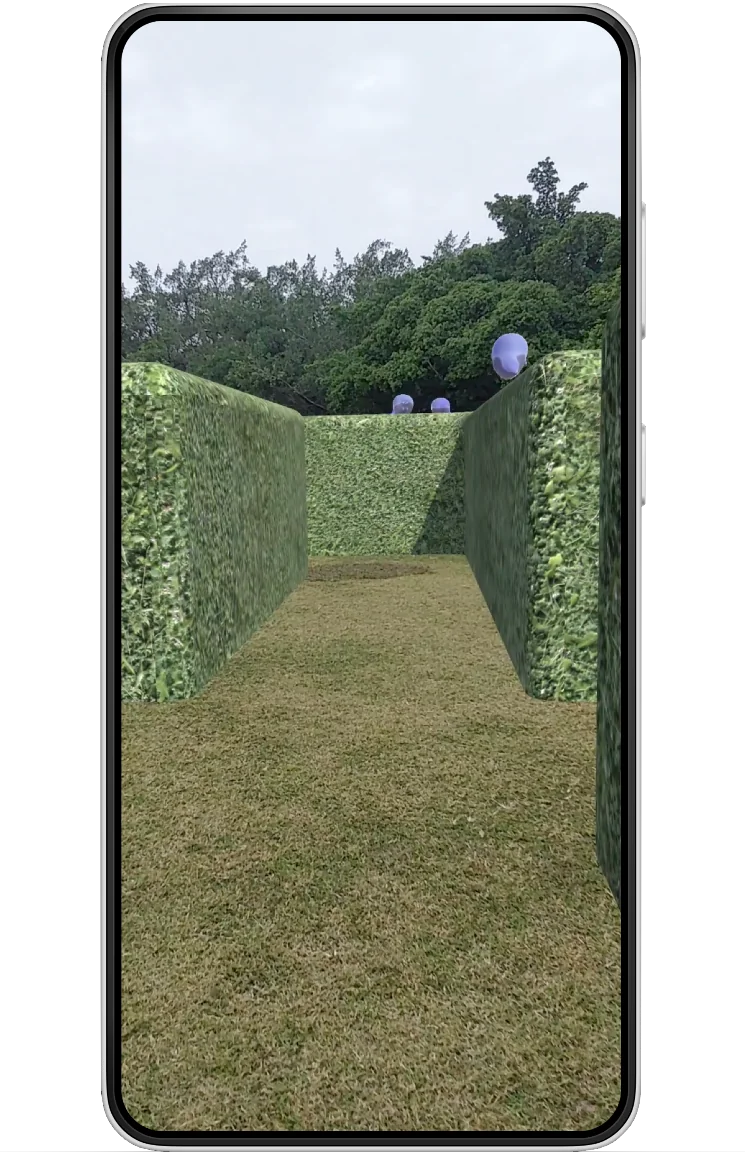
Inside the AR hedge maze: tall green walls flank a corridor of real grass, with faint ghost orbs in the distance.
The corridor
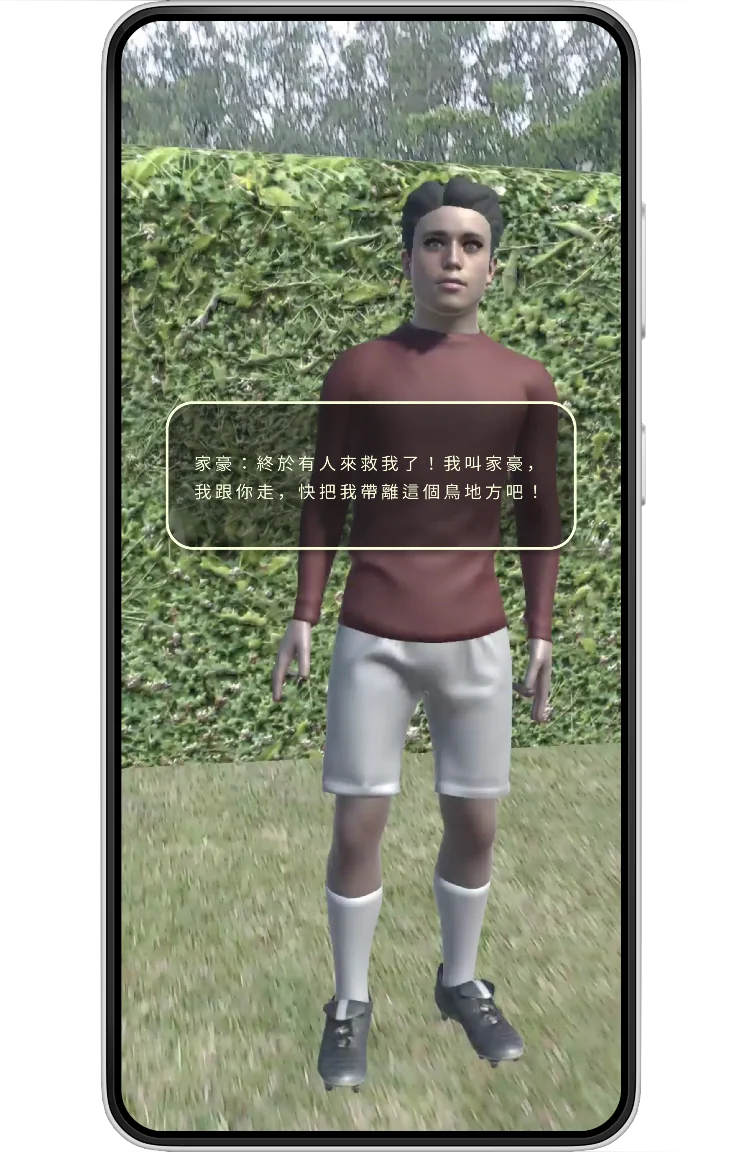
家豪 stands in front of the hedge wall, dialogue reads 終於有人來救我了!我叫家豪,我跟你走。
家豪 rescued
Victory screen: three friends hugging, caption 恭喜你成功救出受困的家豪。
Victory
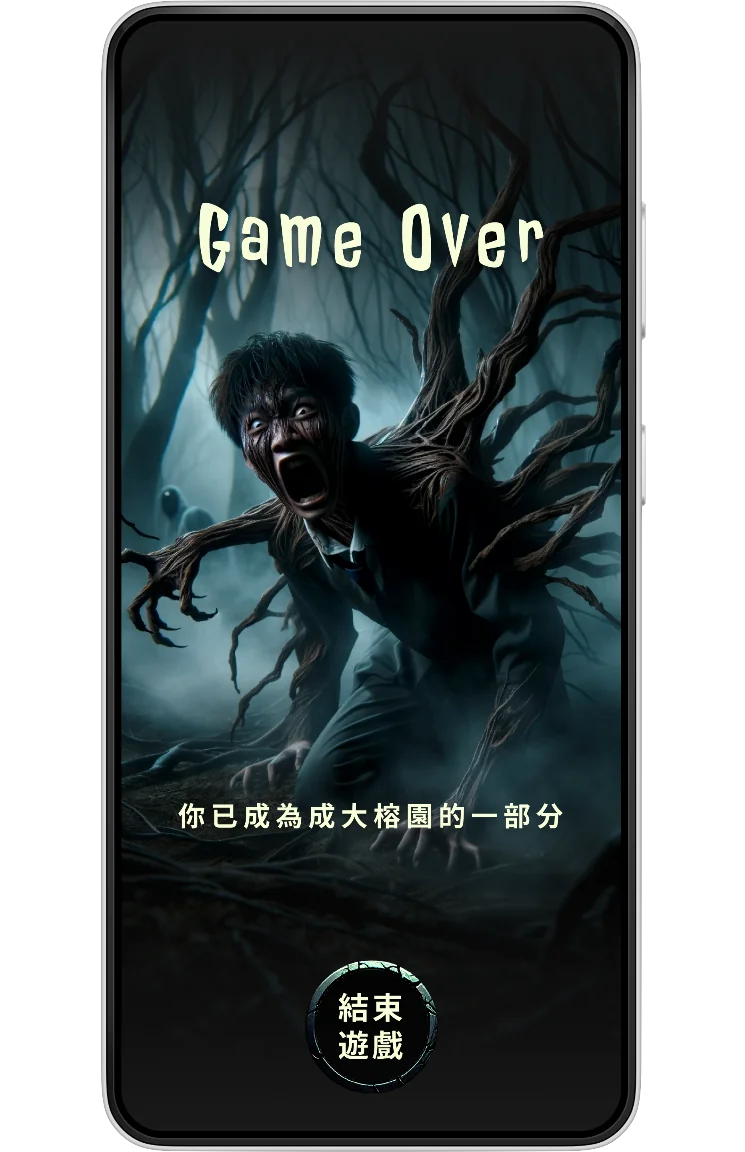
Game Over screen: a twisted figure intertwined with dark tree branches, caption 你已成為成大榕園的一部分。
Game Over
STEP 1 STEP 2 STEP 3 STEP 4 Walk into Banyan Garden 誠綱 asks for help Enter the AR maze on the real lawn Find 家豪 (more ghosts near) Lead to exit Victory Wall × 2 or time-out Game Over
  1. Walk into Banyan Garden. The lawn, the brick wall, the legend already there.
  2. 誠綱 asks for help. His friend went in and hasn’t come back.
  3. Enter the AR maze. Anchored to the real grass at 1:1 scale.
  4. Find 家豪. More ghosts the closer you get.
  5. Lead him to an exit. Victory.
    Two wall touches or time-out. Game Over.
06 · Mechanics

The tech, and what it says.

Every claim below is traceable to a script in the Unity project. The tag at the bottom of each card names the asset that proves it. The principle was simple: nothing in this section is aspirational.

Anchor

1:1 ground-plane placement

Vuforia’s Plane Finder watches the camera feed and detects the lawn as a flat plane. Once a tap commits the position, the entire maze geometry drops onto that plane at real-world scale. No GPS, no markers — just whatever ground the player is standing on.

Vuforia.PlaneFinderBehaviour
Companion

NavMesh AI follow

When the player gets within two metres of 家豪, he starts following. A NavMeshAgent computes a path around the hedge walls in real time, and an Animator switches between idle and walk based on remaining distance.

followAI.cs · NavMeshAgent
Trigger

Distance-based events

Several story moments fire when two GameObjects come within a threshold distance. Ghost-encounter overlays appear, then fade after three seconds. The Win condition is the same shape: when 家豪 or the player crosses an exit point at < 1 m, the scene loads Victory.

DistanceChecker.cs · ImageVisibility.cs
Anti-cheat

Two-strike wall collision

You can’t just walk through the hedge. The first wall touch over half a second triggers a warning overlay. The second wall touch loads Game Over. It rewards careful spatial awareness without being unforgiving to a parent guiding a child.

WallCollision.cs
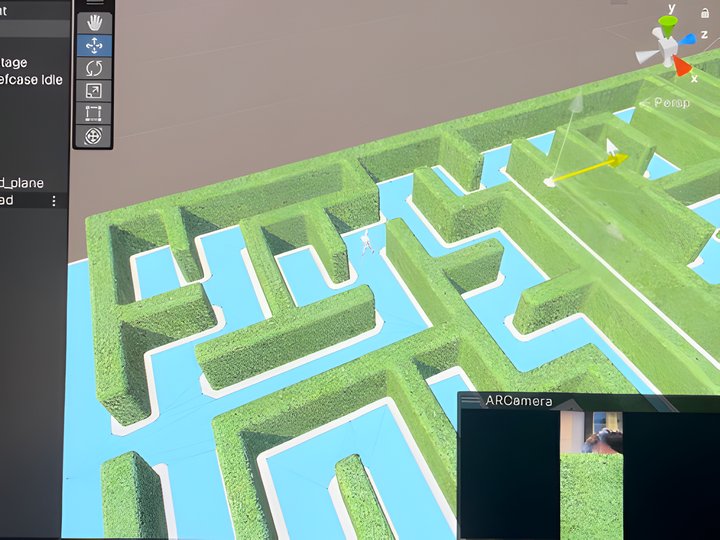
Unity 2022 editor open on a laptop showing the 3D hedge maze scene with green walls and a player-camera ARCamera preview.
Unity editor · authoring the 1:1 maze
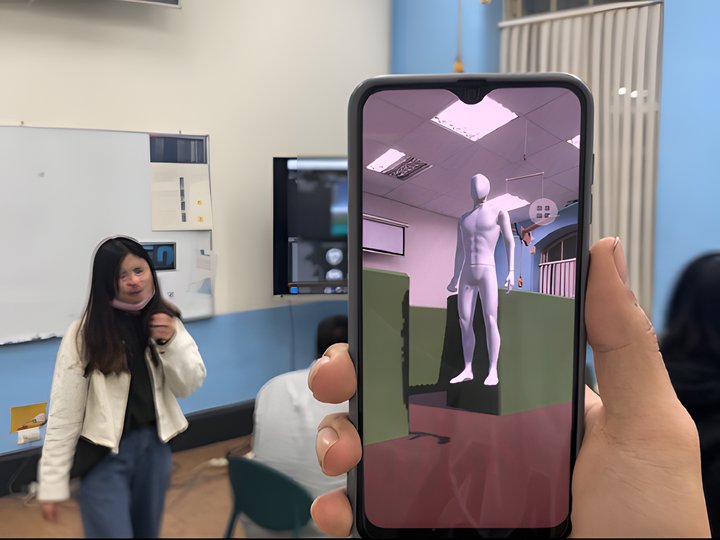
A phone held in hand showing the AR scene anchored on the classroom floor, a humanoid companion model standing in front of a wall.
Vuforia anchor · companion in real space
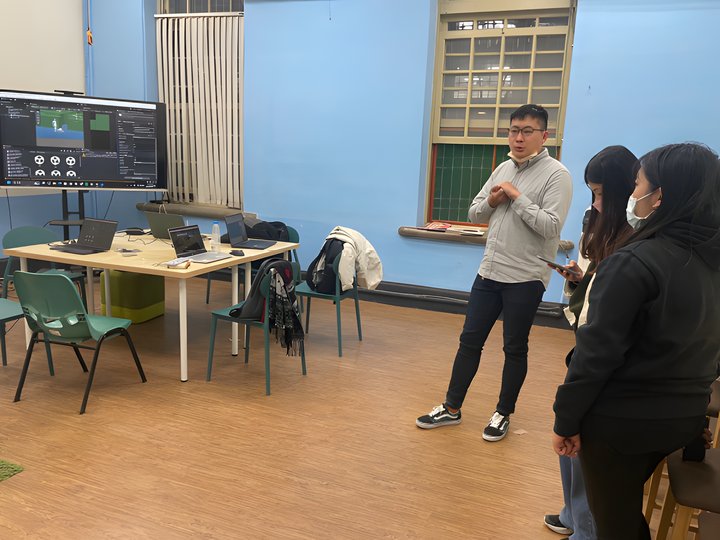
A team member presenting the project in a classroom, audience listening, the Unity editor visible on a monitor in the background.
Classroom demo · explaining the build
07 · Iteration

Four directions the next version wants to take.

Four months produced a playable build that anchors on real ground and tells a story. The list below isn’t a list of what we cut. It’s a list of where the work most wants to go next. The things that became clearest only after we had something to walk through.

Next · Audio

Positional sound, not ambient sound.

The current build runs a single mood track for the whole maze. The next version wants ghost whispers and footsteps that come from where they should. Left when the ghost is to your left, fading as you turn away. Unity’s spatialBlend setting is already there; the design work is choosing what each character actually sounds like.

Next · Co-op

Two friends, two phones, one maze.

The AEIOU pass kept showing us social clusters: families and friend groups, rarely solo. The next version explores how two devices anchored to the same plane could let two people see each other inside the same maze, hand off the search, take turns being the one who finds 家豪.

Next · Place

Site-specific puzzles.

Plane Finder works on any ground, which is a virtue. The game runs on any lawn. The next version wants the opposite at the same time: GPS-locked clues that only resolve when you stand near the actual banyan, the actual red brick. The legend is about this place; the puzzle should be about this place too.

Next · Replay

A maze that remembers it’s been walked.

The walls are fixed today. The next version wants to remix the geometry between plays so a second visit is recognisably the same garden but a different path. Procedural generation inside a hand-authored frame.

08 · Playtest

Watching people walk around things that weren’t there.

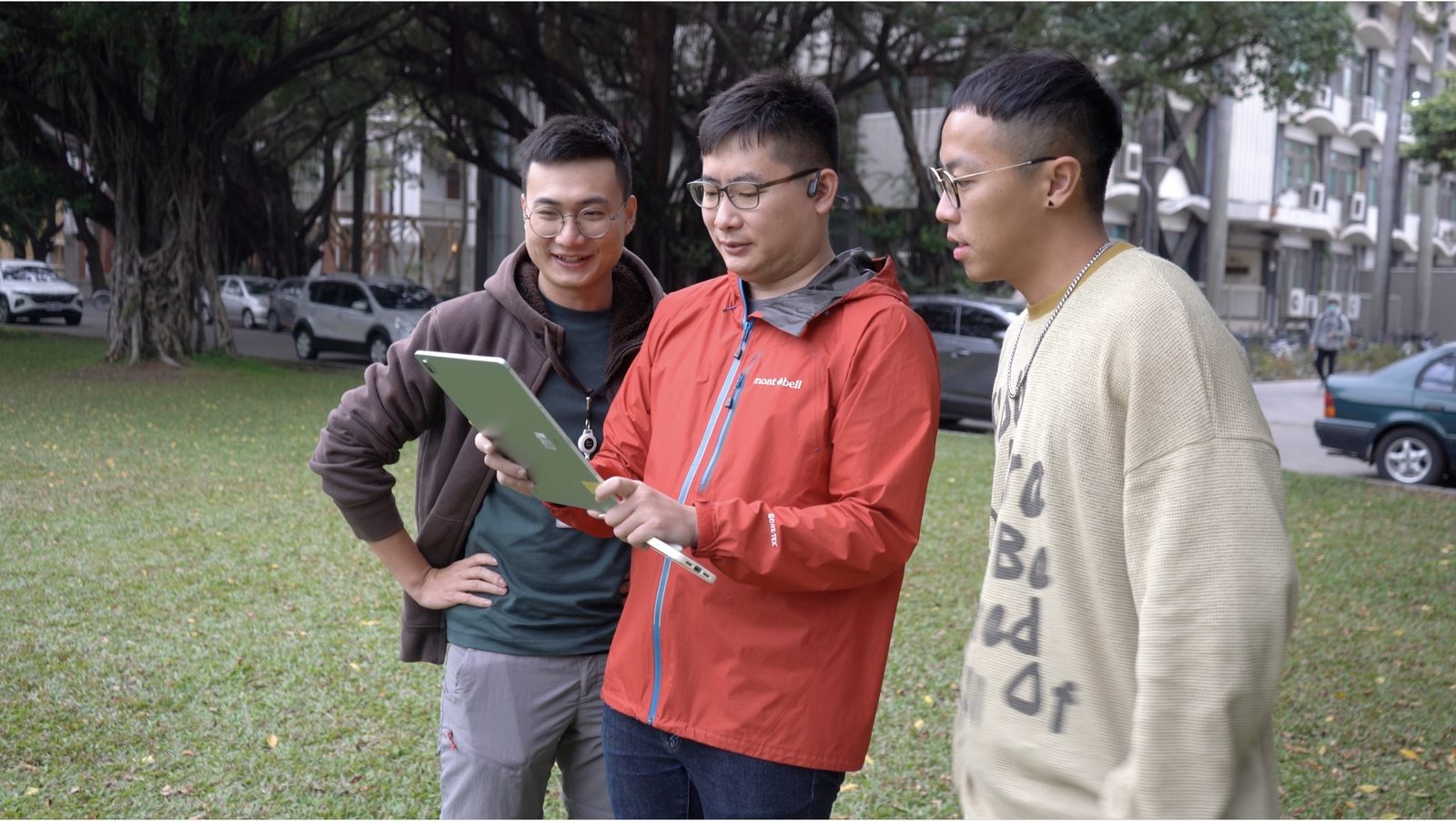
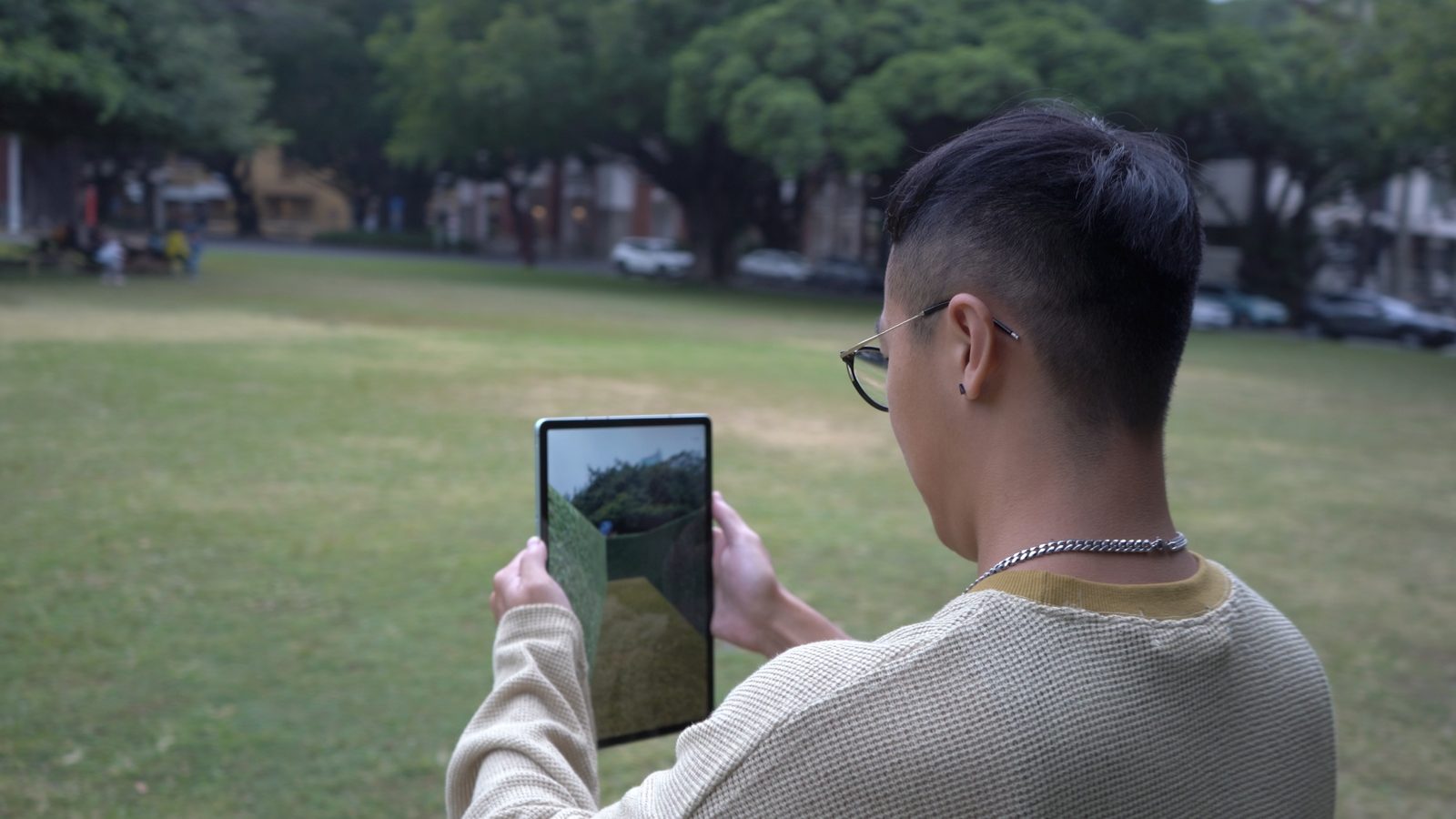
In the garden, classmates and a few curious strangers picked up the tablet and tried to find 家豪. The most interesting part was watching them from outside the screen. They curved their bodies around hedge walls only their device could see.

Three testers gathered around a tablet under the banyan canopy, looking at the AR maze together. A tester from behind, holding a tablet that shows the AR maze; he stands on the real grass with banyan in the background. Tester in red jacket holding a phone, looking down at the screen on the grass.
The fascinating part was watching players from outside the screen. They were avoiding invisible boundaries in the real world. AR wasn’t decorating the space — it was conditioning how people moved through it. — project reflection, Behance 2023
09 · Team

Four people, four parcels, one deadline.

Each of us owned one technical or creative parcel. Mine was the integration role: making the parts fit before the showcase deadline. None of it ships without each of theirs first.

顧文宇Wenyu Ku · Dev Lead

Concept origination · scene integration · build-cycle QA

林翊麒Yi-Chi Lin

Vuforia plane-finder integration · story narrative lead · character animation

郭亭妤Ting-Yu Kuo

Ghost animation · game art · campus-legend research and source material

莊凱硯Kai-Yan Chuang

NavMesh AI follow research · all 2D design: UI, presentation deck, exhibition poster, promo film

10 · Reflection

What four months on a lawn taught us.

AR is often pitched as a way to put new things into the world. The part this project kept teaching us was the opposite. AR is also a way to make people notice the place they’re already standing in.

What the player saw was the garden, with the maze drawn into it. The phone wasn’t a screen to vanish into; it was a medium for taking the garden in differently. The design goal was to make the place come forward through the device, not behind it — the cane, in Merleau-Ponty’s phrase, that becomes a sensing organ rather than disappearing in the hand.

The banyan tree visible above the hedge walls. The red-brick wall glimpsed through a gap in the hedge. Real garden details that the device, used well, made more visible. Not less.
11 · Coda

Passion of 莊凱硯.

This is where 凱硯 went past the brief. The team needed an exhibition poster; he made an A1 print dense enough to become its own document of the work. The two-minute film no one had asked for was the one he wanted to make. The project doesn’t feel like a deliverable in his hands. It feels like a place he had taken the time to fall for.

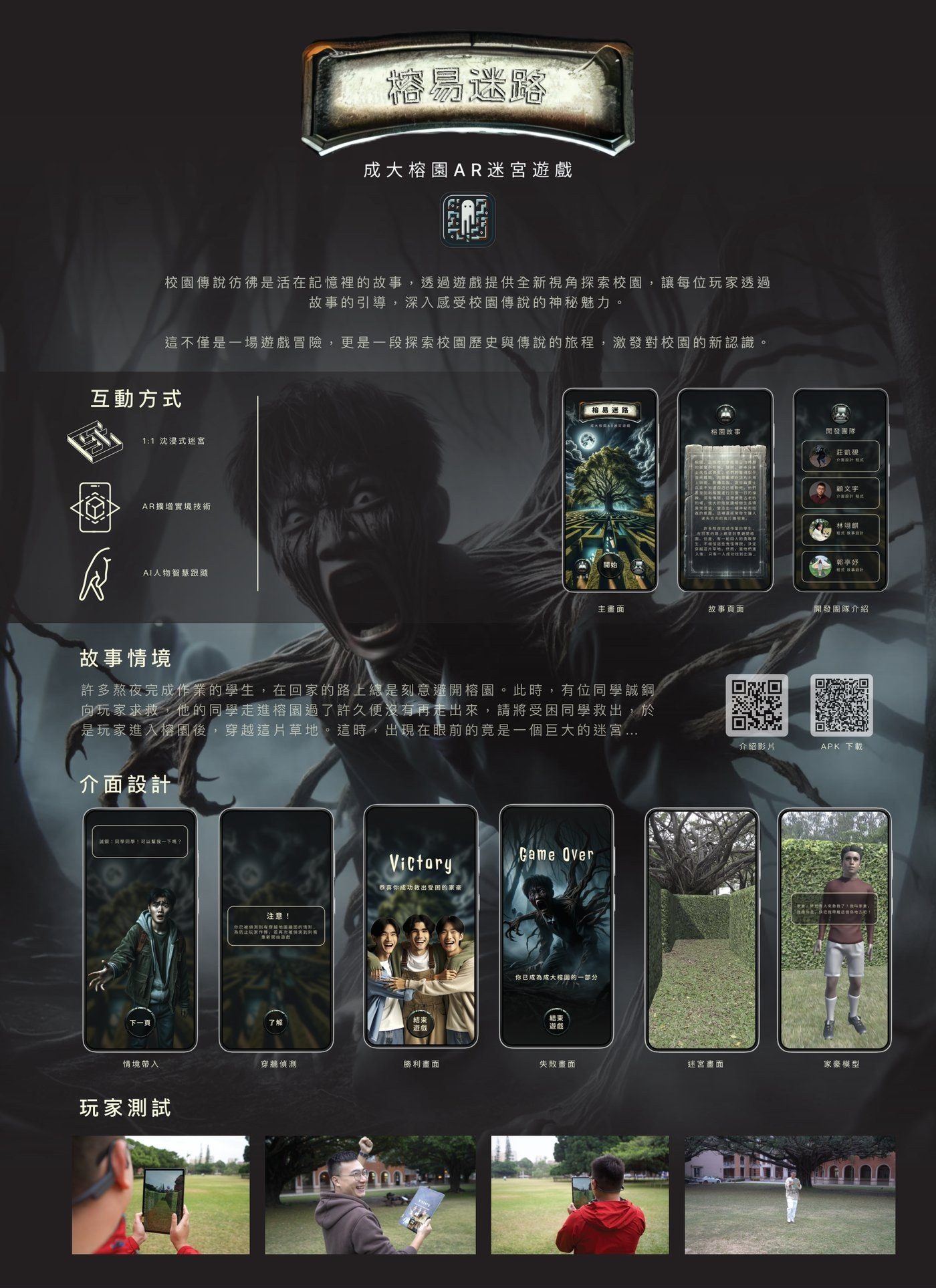
榕易迷路 exhibition poster — A1 vertical print with the game title at the top, a ghost-face central illustration, six phone-frame UI screenshots, six testing photos, and QR codes for video and APK download.
「榕易迷路」 · NCKU XTDesign year-end showcase, 2023
Promotional film · 2:14

See more of 凱硯’s work →

12 · Appendix

Thanks.

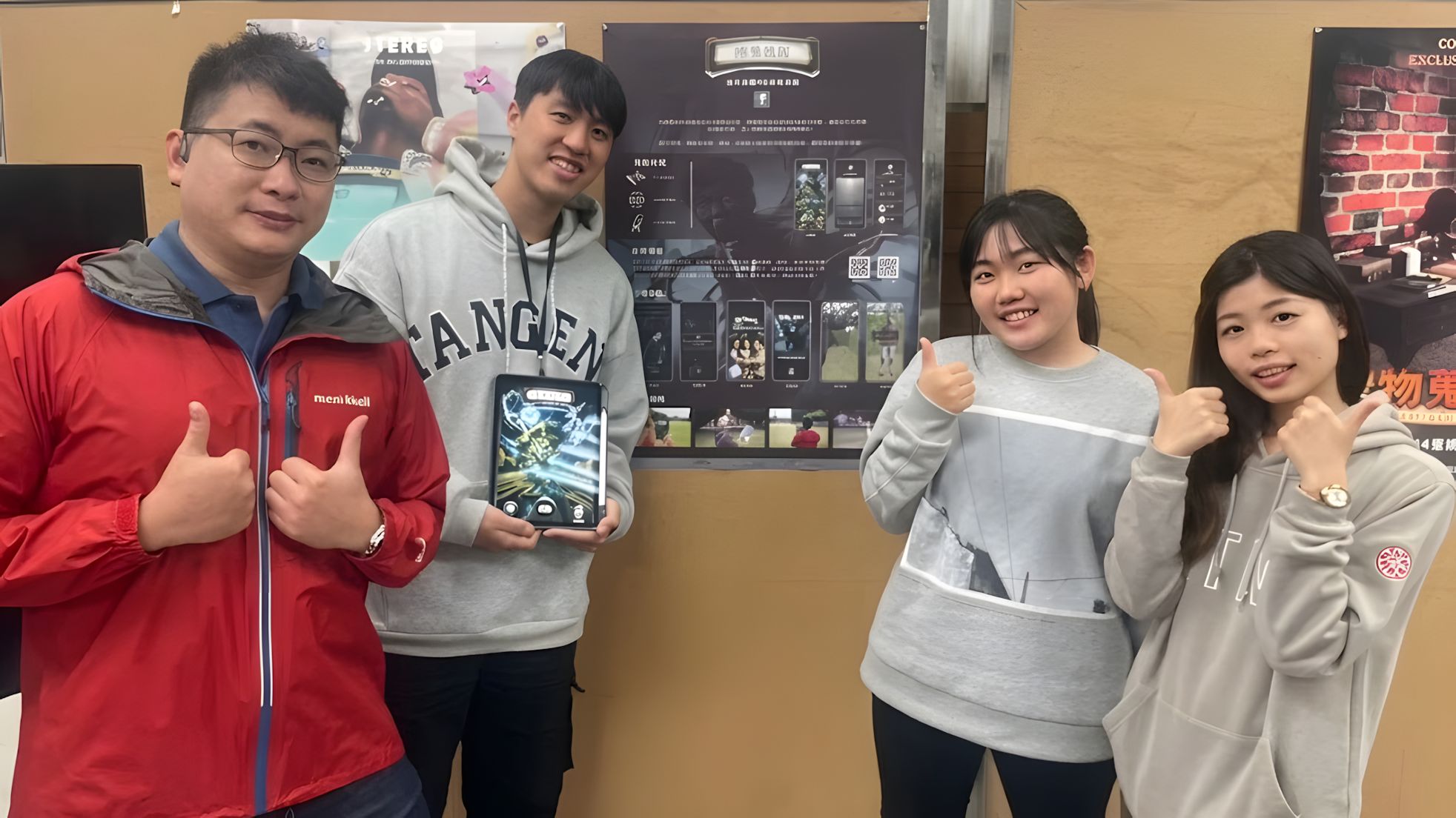
Four students standing in front of the 榕易迷路 exhibition poster, smiling with thumbs up. One holds a tablet showing the app.
December 2023

This project was not made alone. Each person in this picture changed something about the work, and something about me. Looking at the picture now, the strongest thing I feel is thanks.

13 · Web Port

A 2026 browser port.

The 2023 Unity AR build only ran on the iPad we brought to the campus showcase. In 2026 I ported the whole game to Three.js so anyone with a browser can play it. We hope it brings you the same feeling we had back then, walking through 榕園.

Walk into the Banyan Garden and bring 家豪 home.

Open the web build →

Desktop only for now — keyboard WASD + mouse-look. Touch controls aren't implemented yet.